
MOD. Beginnings
Immersive + interactive experiences bookend cornerstone MOD. exhibition.
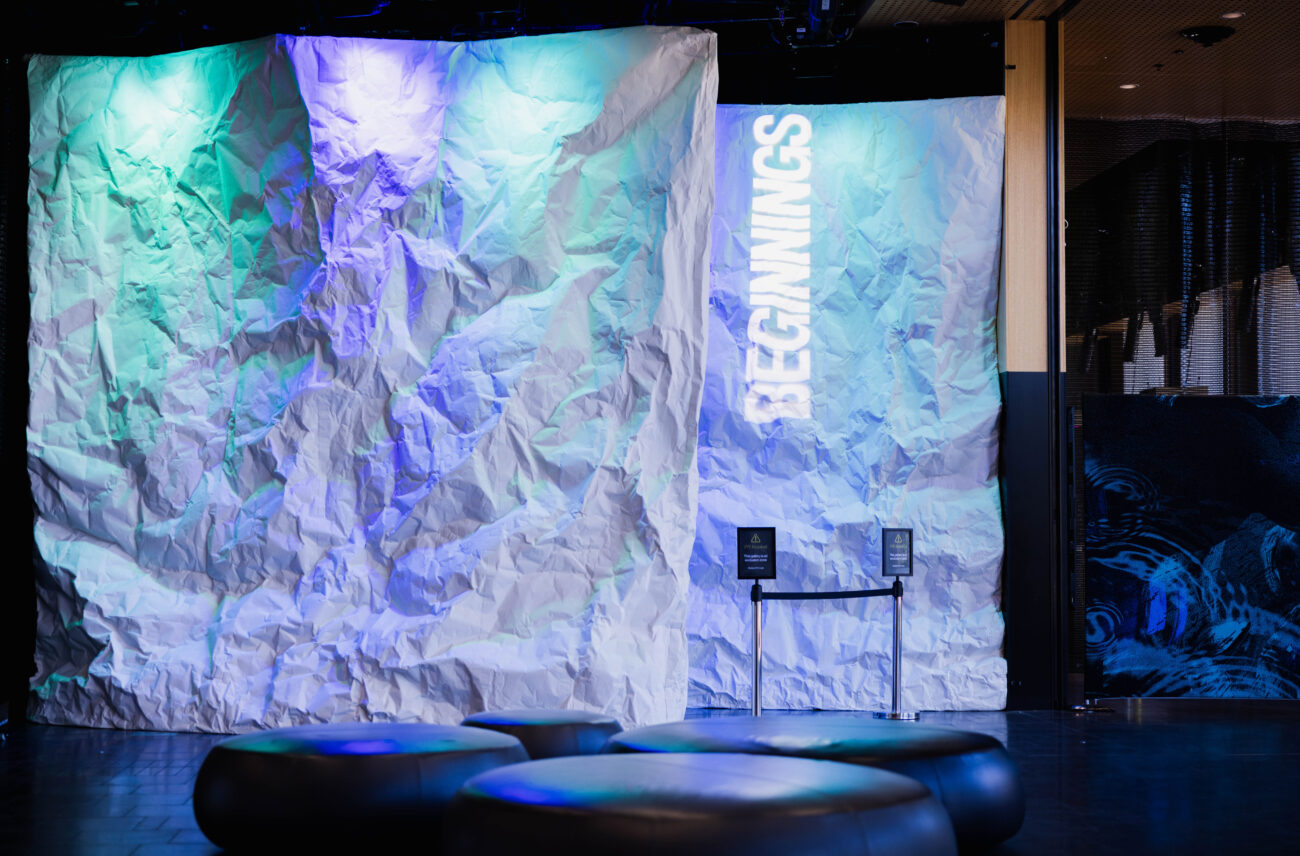
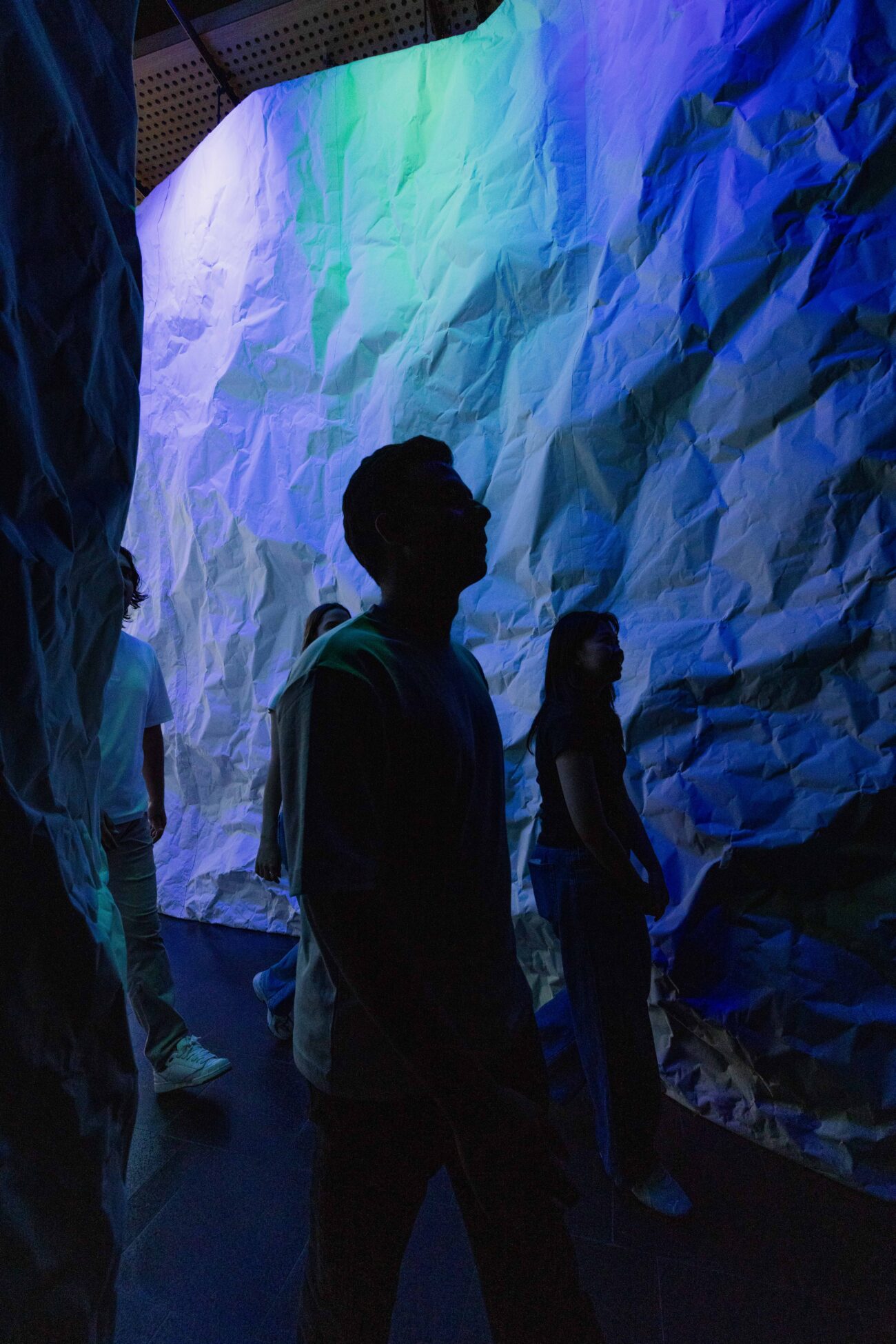
At the threshold and conclusion of the landmark MOD. BEGINNINGS exhibition sit two contemplative experiences by S1T2. Experiential bookmarks that provide a framework for the exhibition premise: that in a world of countless possible futures, each of us carries the capacity to shape what comes next.
Through an immersive interview-driven soundscape and subtly interactive real-time floor projections, Perspectives offers a first breath and emotional prologue, orienting visitors and preparing them for what is to come. Meanwhile, in Foresight a generative survey and encompassing hologauze projection mapping environment provides a moment of personal reflection on how to move forward.
Evoking a shared sense of arrival
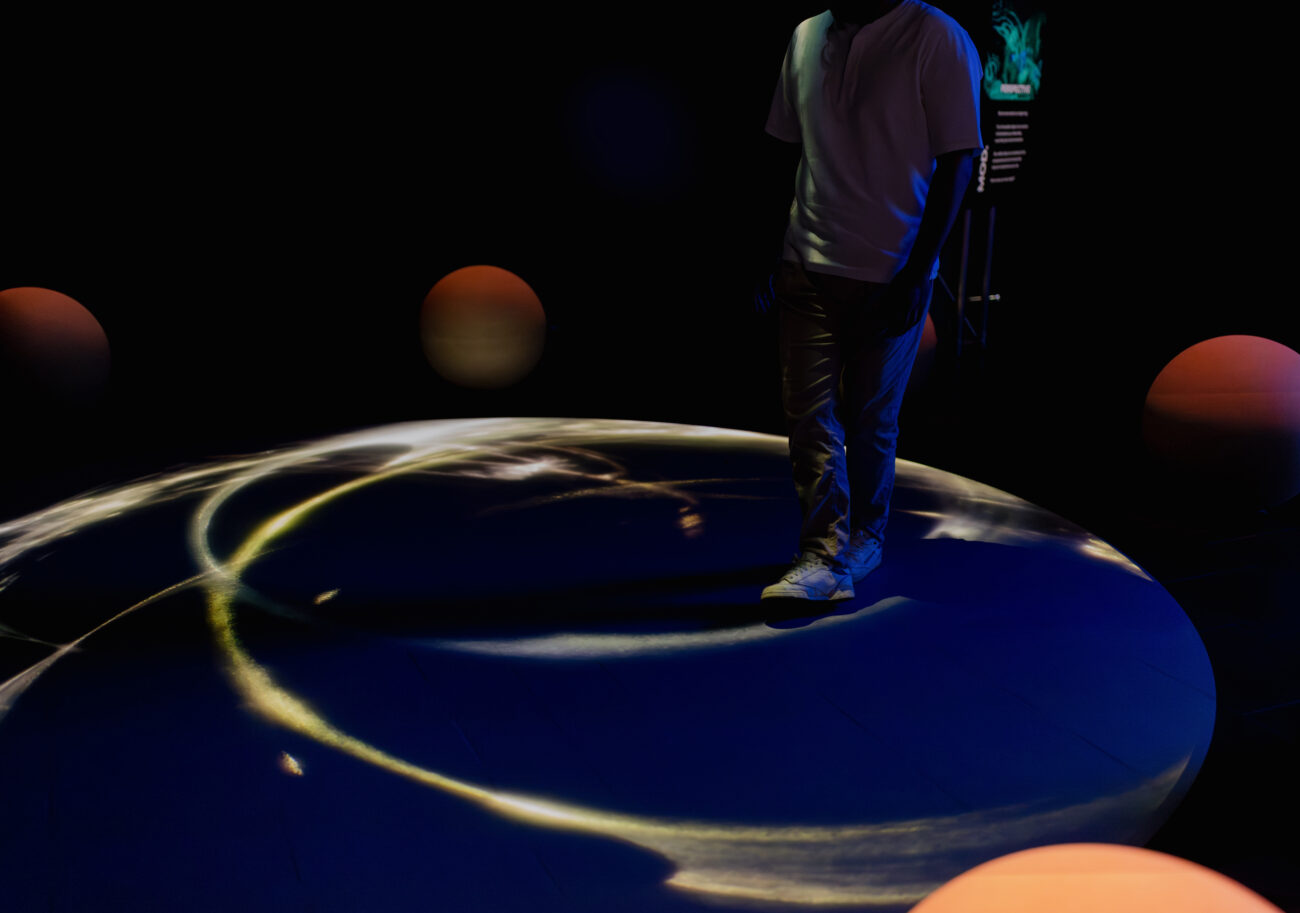
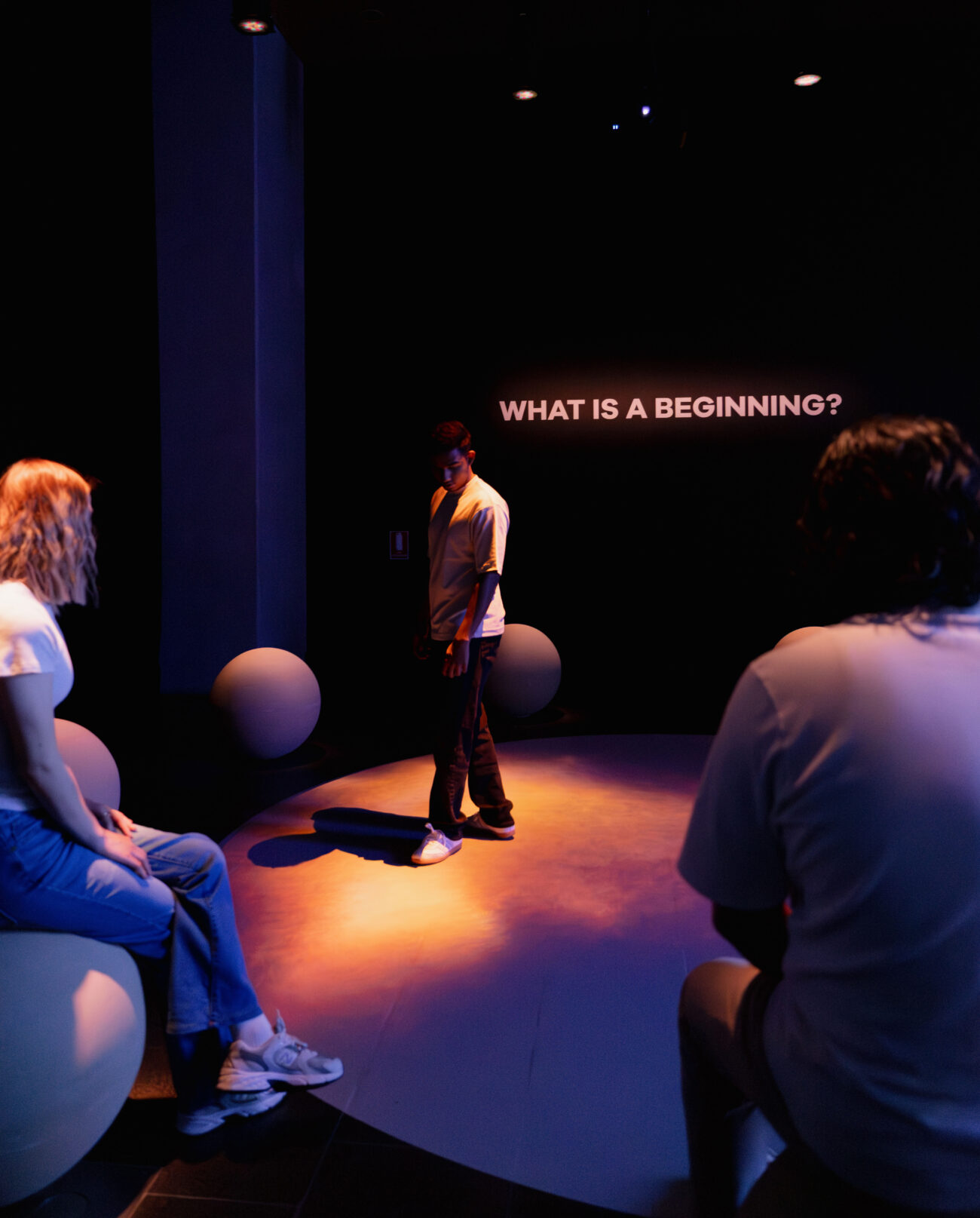
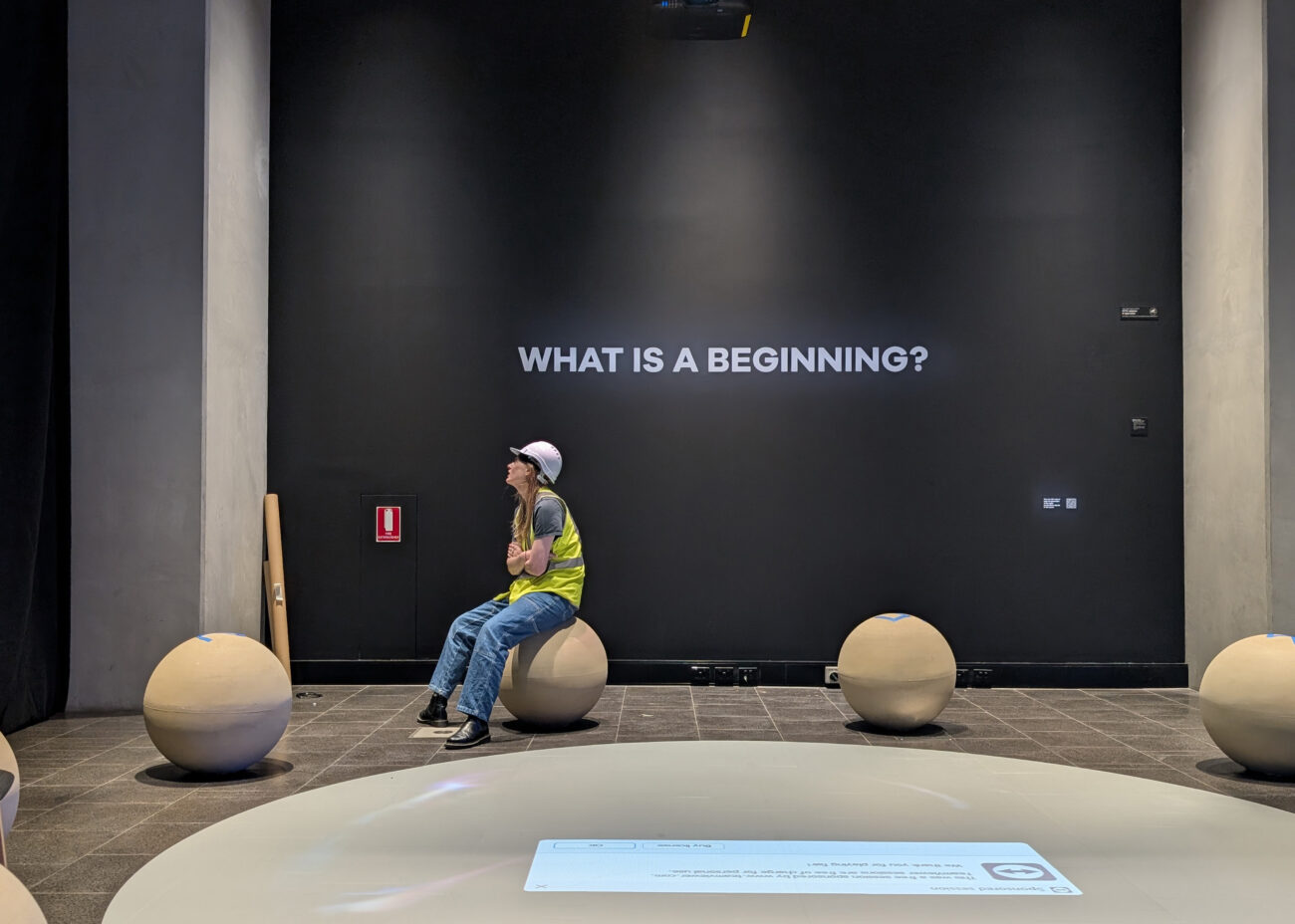
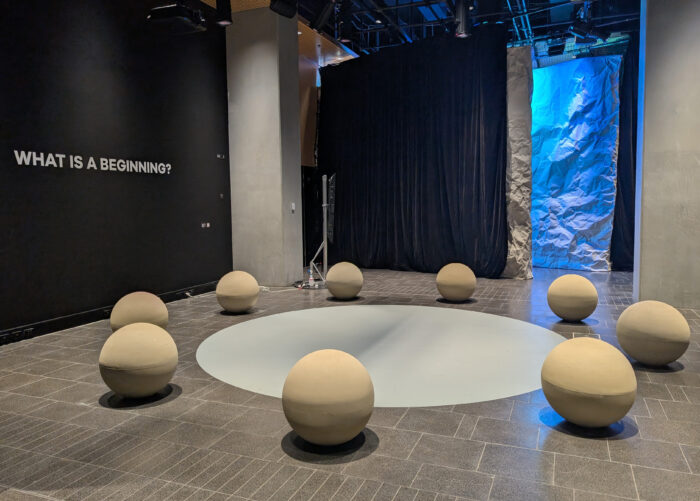
'Perspectives'Perspectives marks the threshold of the MOD. BEGINNINGS exhibition – an introduction to the exhibition themes not as abstract ideas but as human stories. It is designed as a conceptual and emotional prologue, grounded in the ancient tradition of storytelling, yet layered with contemporary tools and ideas.
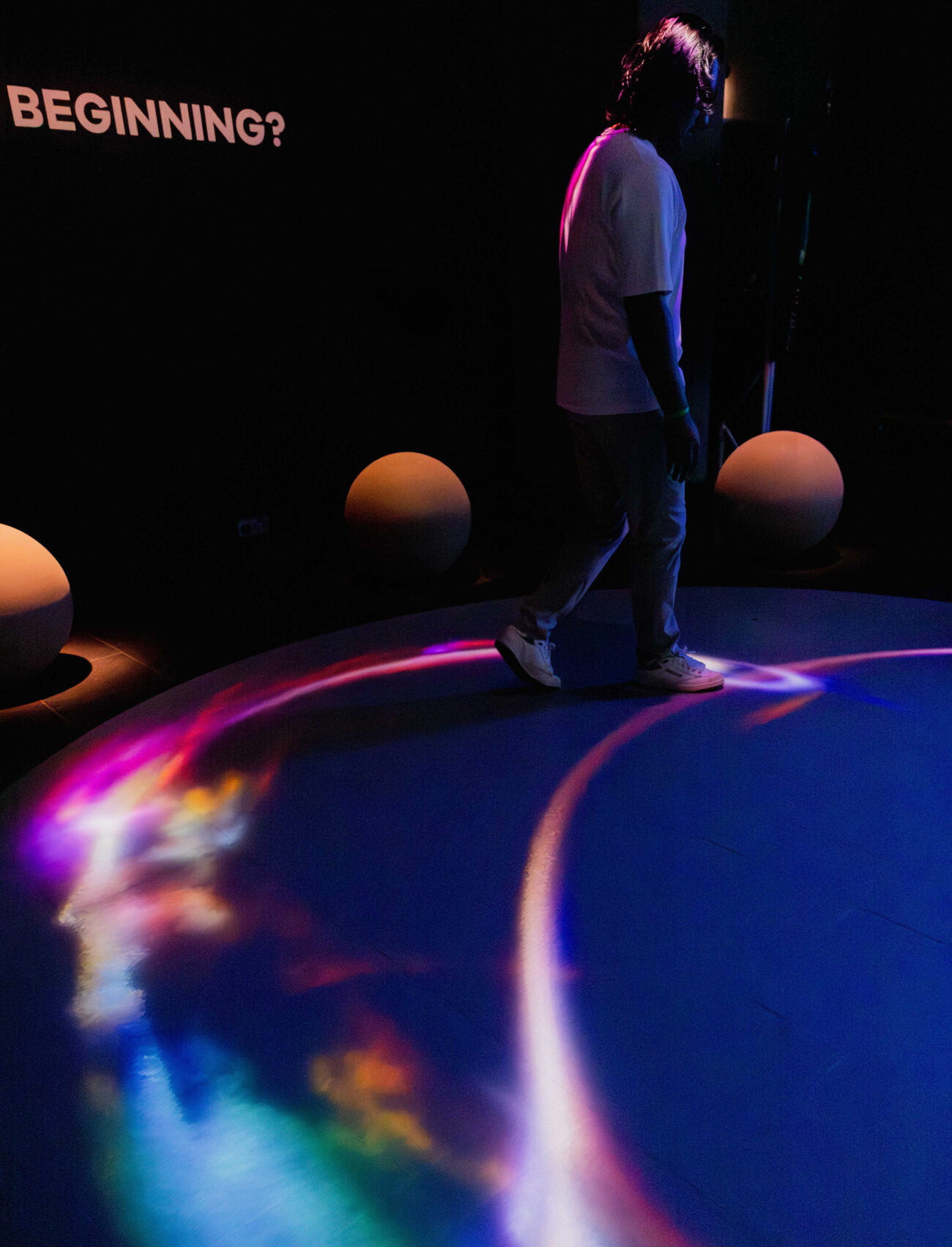
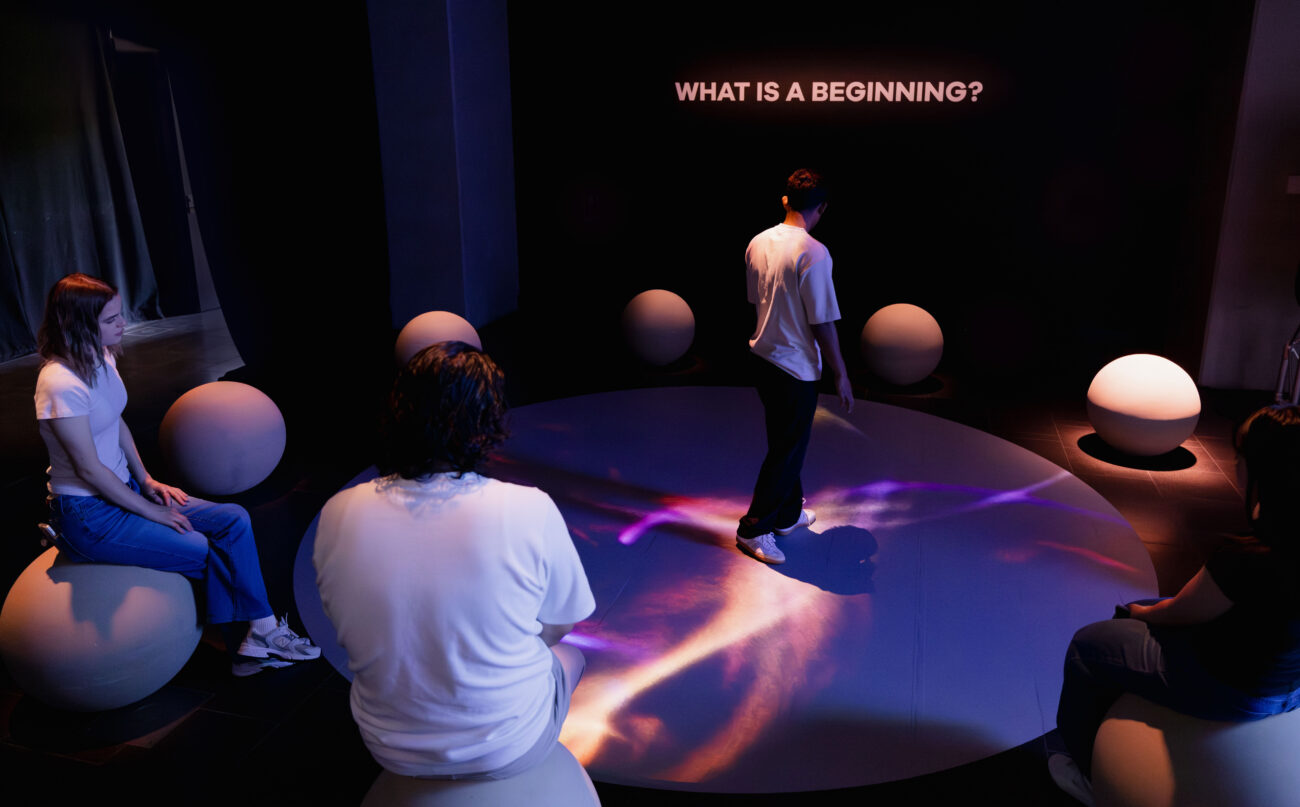
At the heart of the space, nine sculptural spheres rest in a circle, a tangible anchor to the experience. Between them, projected light ripples slowly, pulled in a soft gravitational dance as voices ring out, offering meditations on different ways to begin. Here, visitors arrive not only to the exhibition, but into a shared space of imagination and possibility.
A layered, evolving soundscape
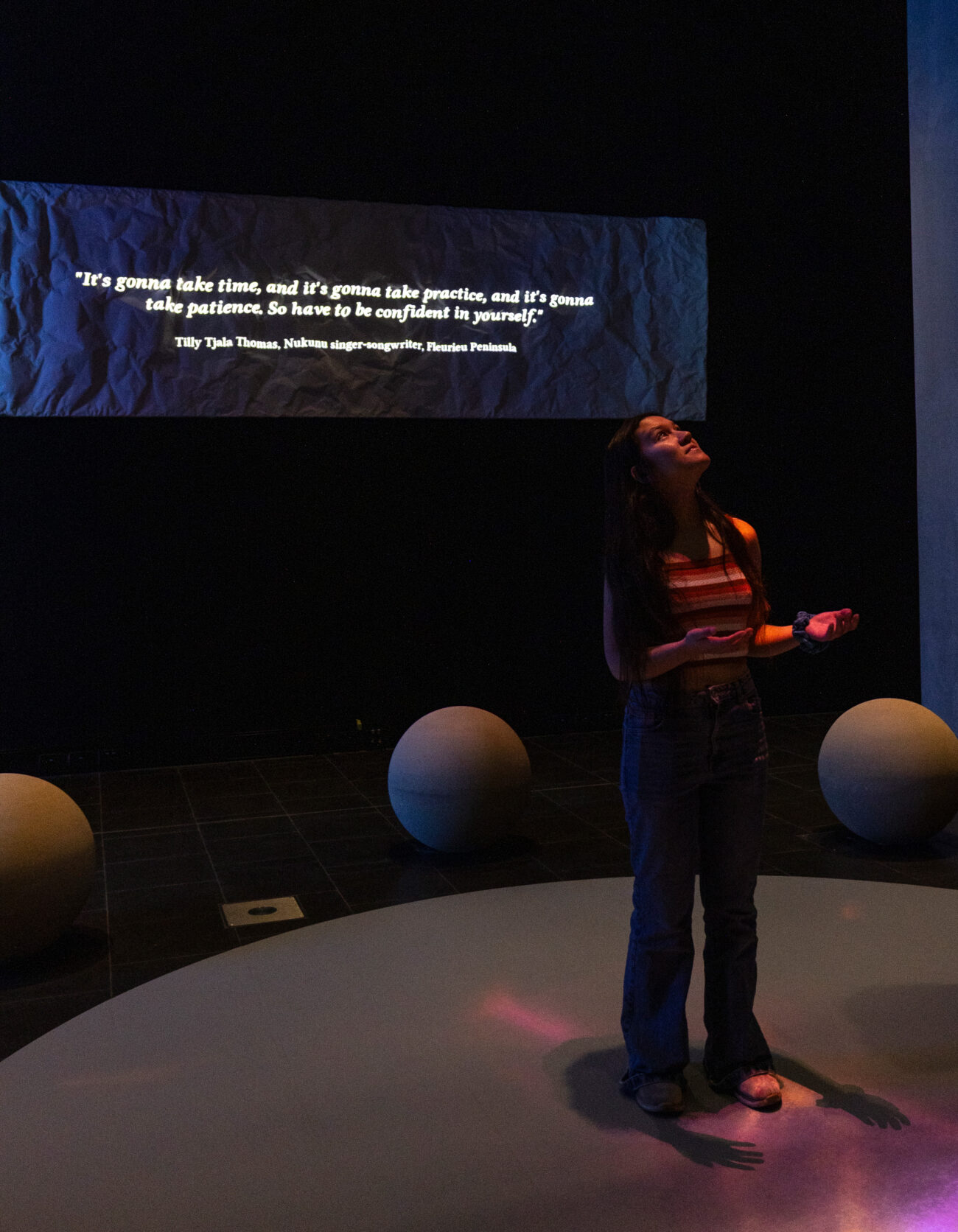
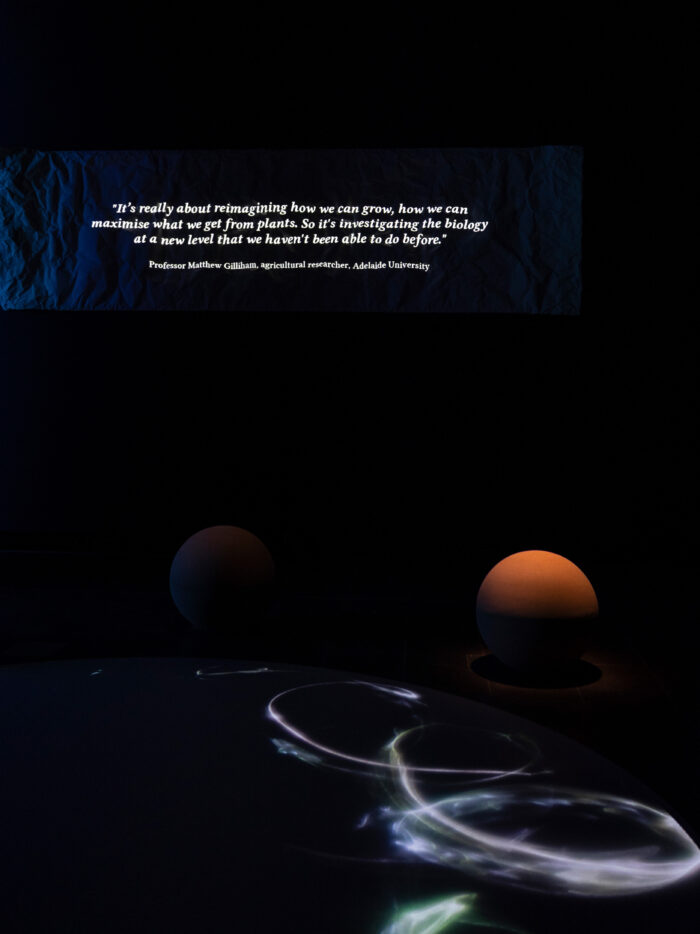
Audio DirectionSpoken word forms the backbone of this opening experience. Each theme of the MOD. BEGINNINGS exhibition is represented by a voice: a story, a perspective, a fragment of what it means to begin. These voices provide energy input into the visual field of the projection, defining what visitors feel and see.
Working with sound designer Gary Sinclair, we wove these voices into a continuous immersive soundscape. An elemental piece, built from natural textures, digital tones, qualities of human voice. Voices don’t appear all at once, but emerge in cycles with each chapter. Tones and traces are layered into voices over time, enriching the aural landscape. An audio composition that feels both ancient and speculative.
Projected light field, rendered in real-time
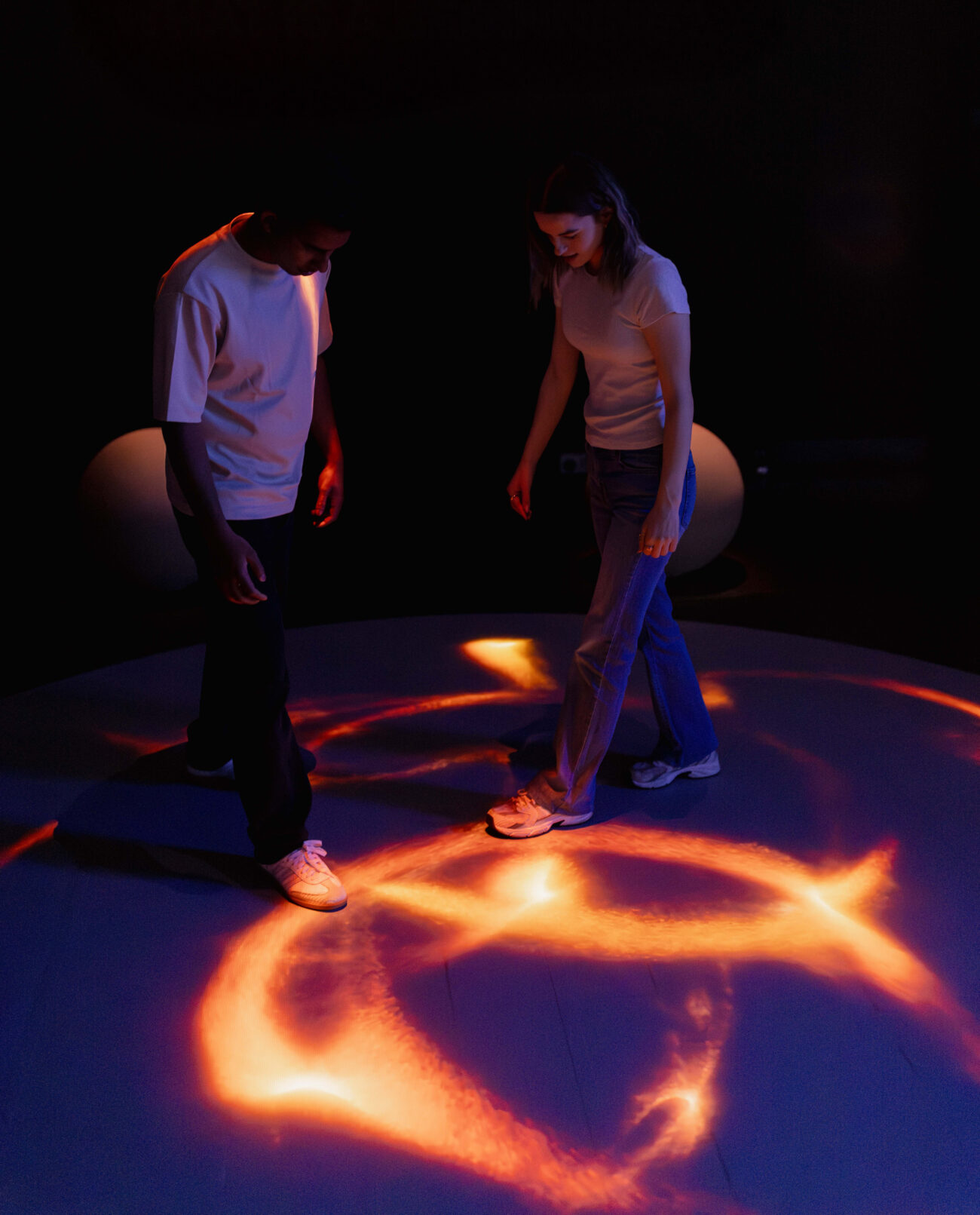
Visual ProjectionAt the centre of the Perspectives space sits a field of projection: a gravity well of natural light, rendered procedurally with Unreal Engine’s Niagara particle system.
Here, light bends and shifts, as if pulled by gravitational forces. Shimmering, fracturing, recombining in rhythm with the spoken word. An environment that listens as much as it speaks.
The projected visuals in this space needed to be elemental and meditative. We wanted to support the act of listening, rather than overwhelm it.
Each point of light behaves like a tiny photon, interacting in real-time with thousands of others within a system of over 60 carefully tuned parameters. Every chapter had its own unique state, so that over the 20 minute experience visuals feel fluid, reactive and alive.
An invitation to shape the experience
InteractionWhile the voices from the exhibition’s key figures guides the Perspectives experience forward, the presence of each visitor also leaves a mark. Entering the immersive projection field, visitors are detected using depth sensing and motion tracking. They now exert a gravitational force within the system: their presence doesn’t simply trigger an effect, but rather acts as a reflective object – bending, pulling and reorganising nearby light. Each visitor becomes part of the exchange: shaping the light and being shaped by it.
Enhancing sensory immersion in real time
ProgrammingBehind the scenes, Perspectives was an exercise in integration. As is so often the case with simple experiences, everything had to be just right in order for the effect to work. We created a distributed, network-synchronised system to coordinate floor projection, subtitle projection on the wall, spatial audio and lighting – all in real time.
This wasn’t just a digital experience; it was a blended immersive world that spoke to multiple senses at once.
Audio cues and lighting control were triggered live as part of the media system, synchronised with the primary and secondary projection surfaces. We even repurposed the tracking cameras to provide another input against which to dynamically adjust visuals, enhancing immersion in this first experience of MOD. BEGINNINGS.
Actively bringing the future into focus
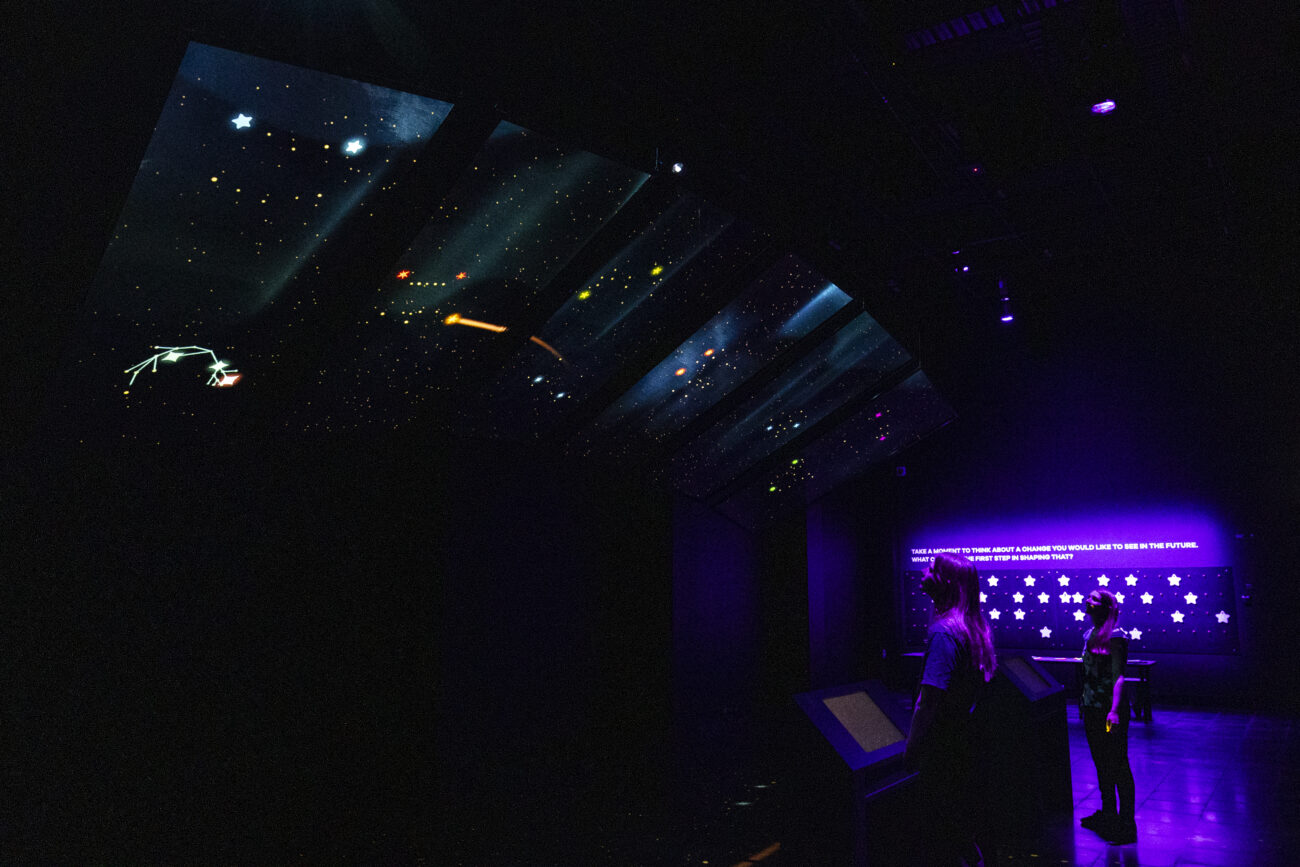
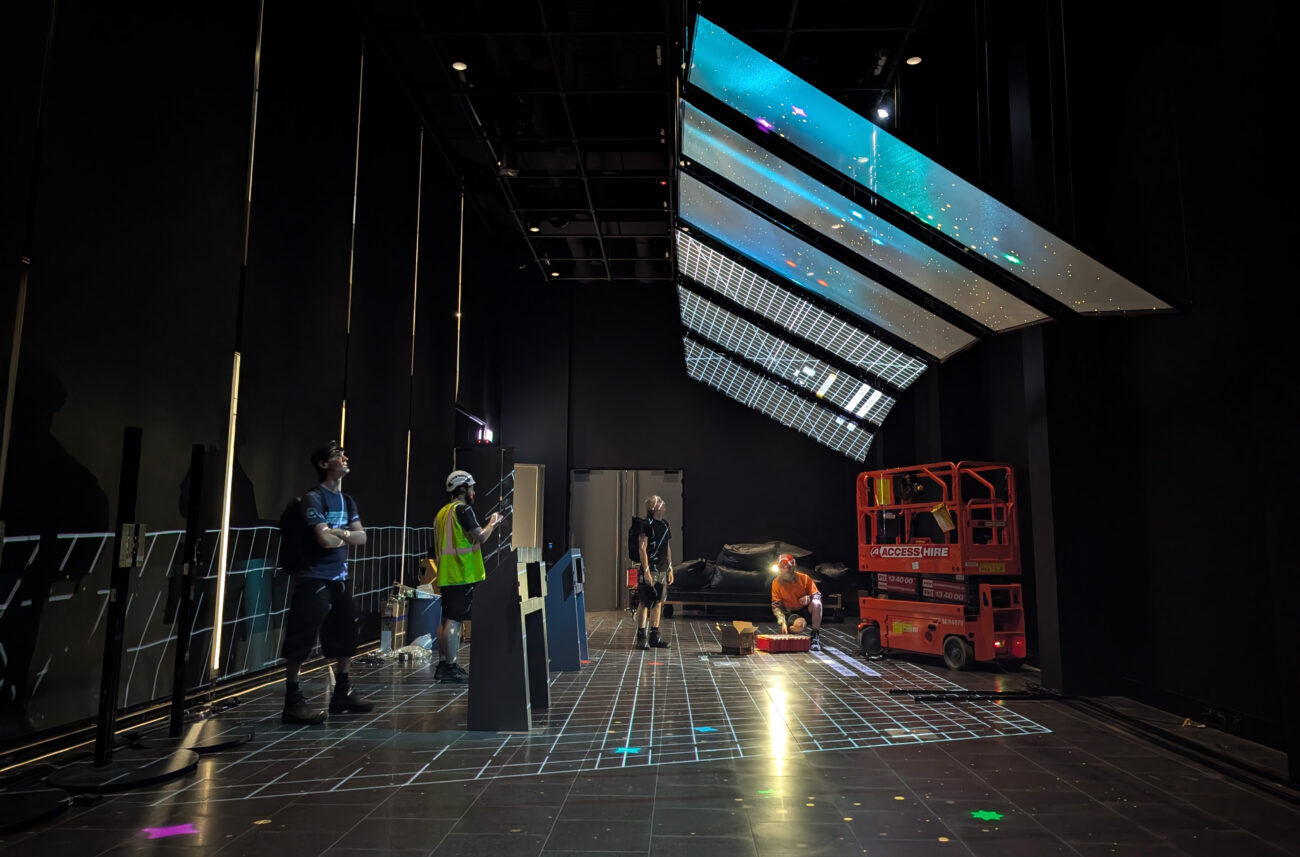
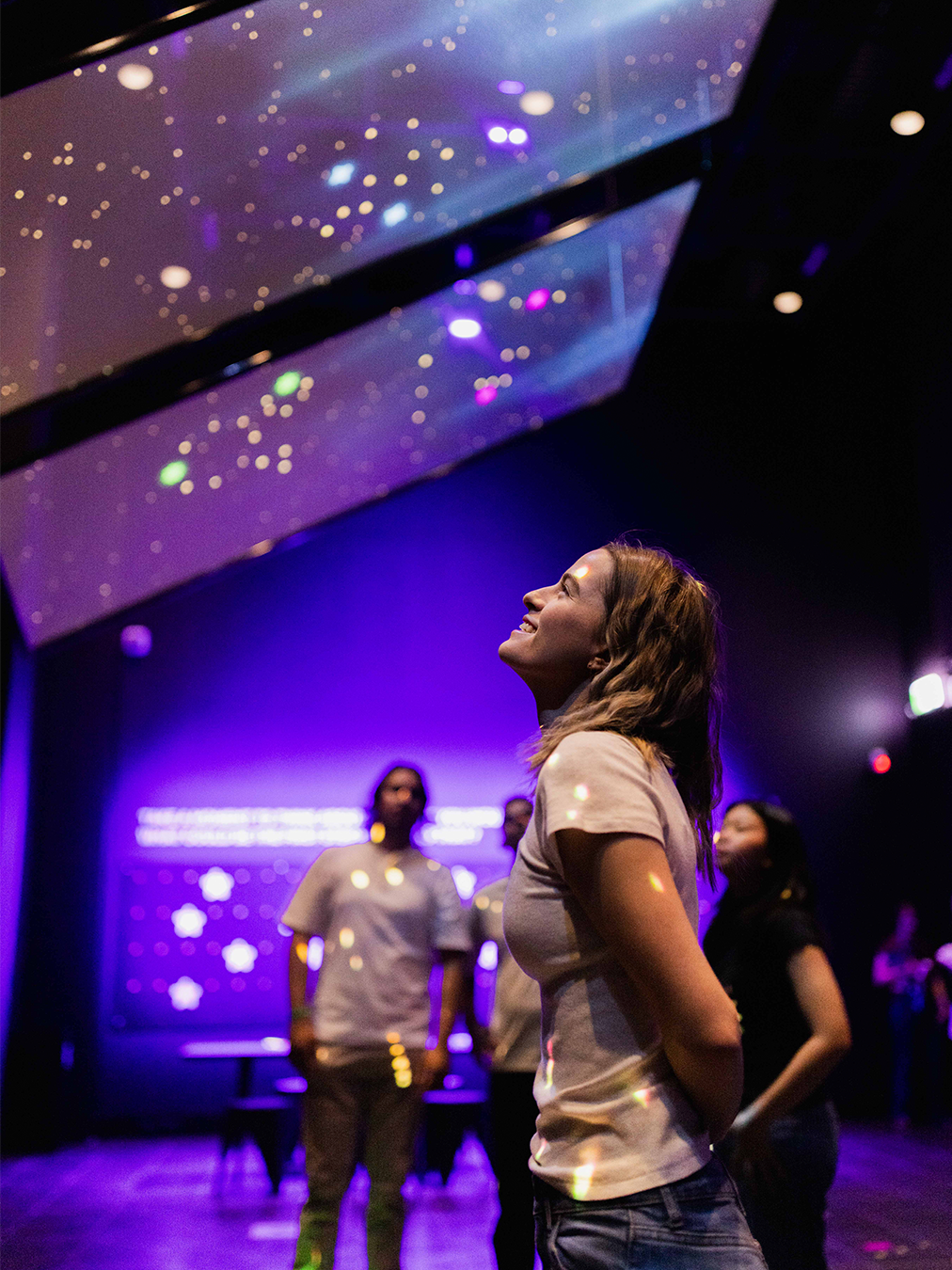
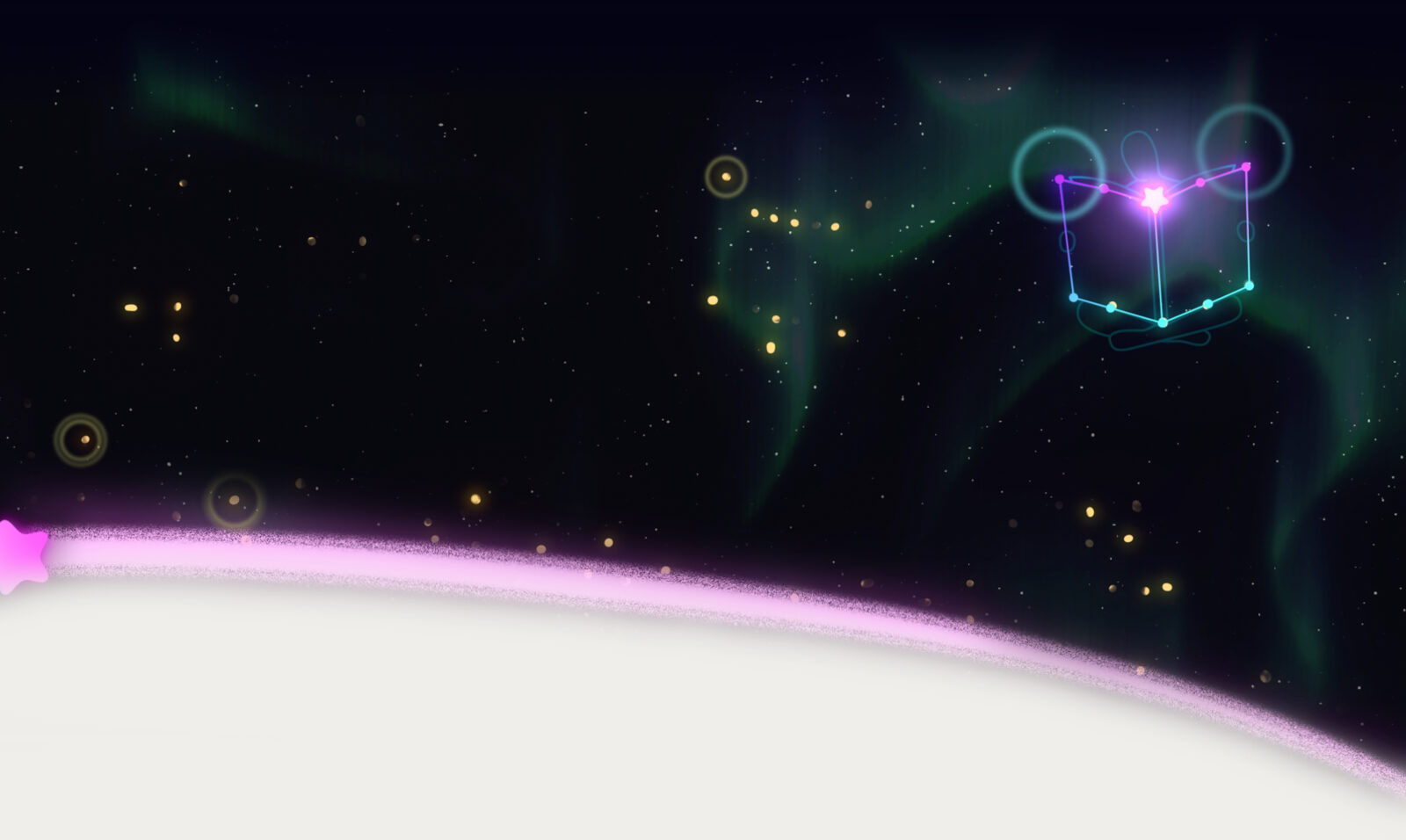
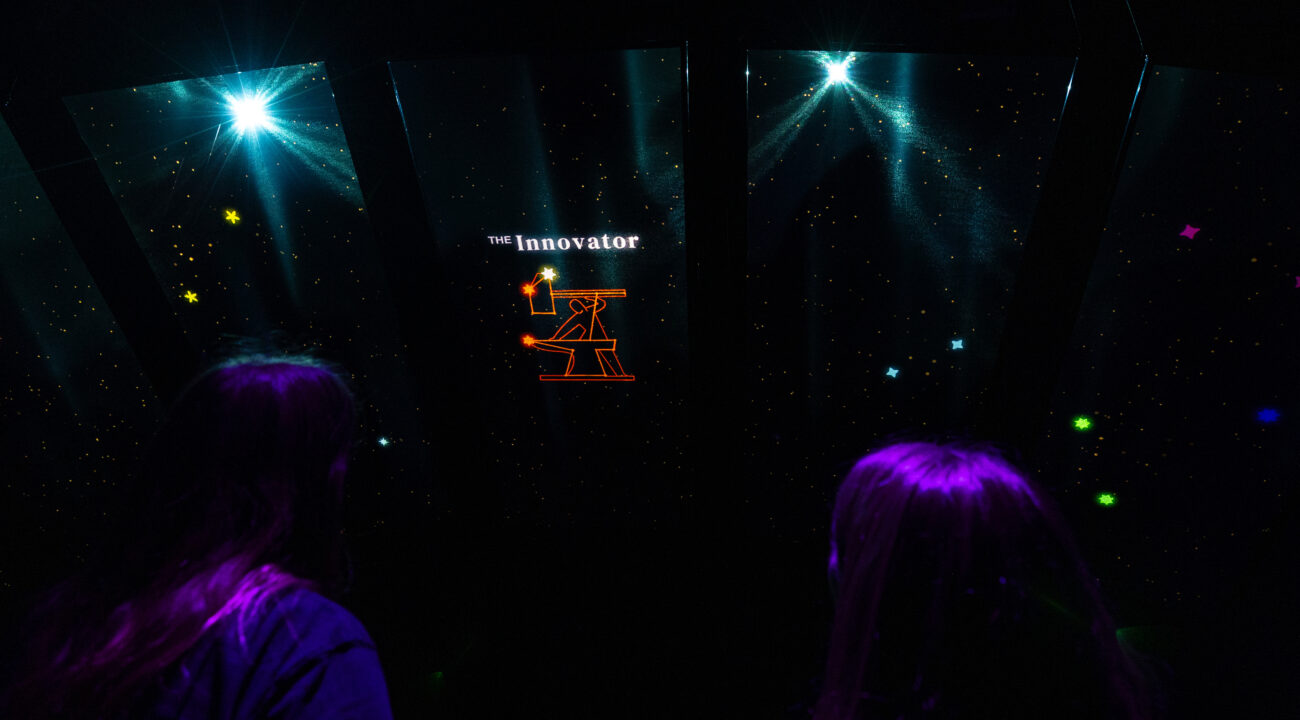
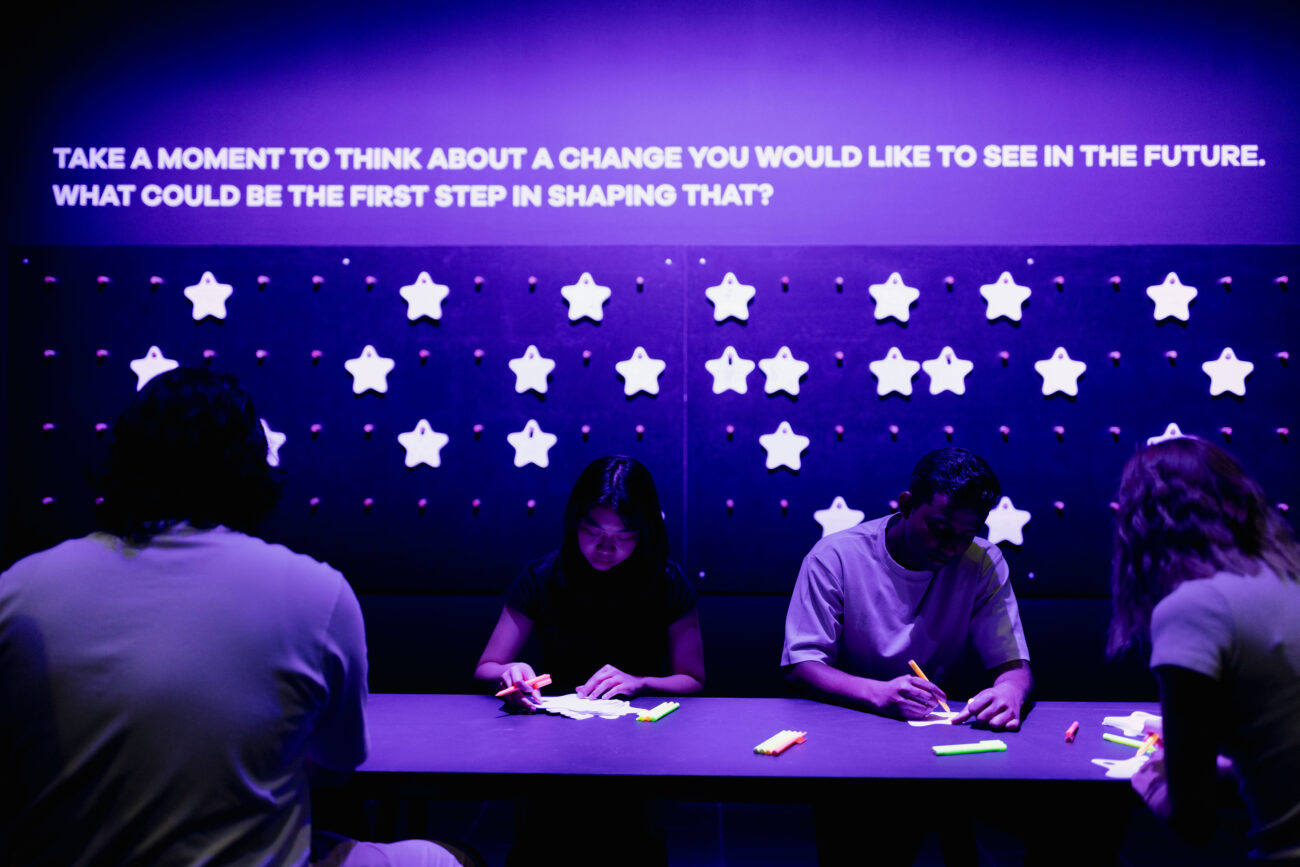
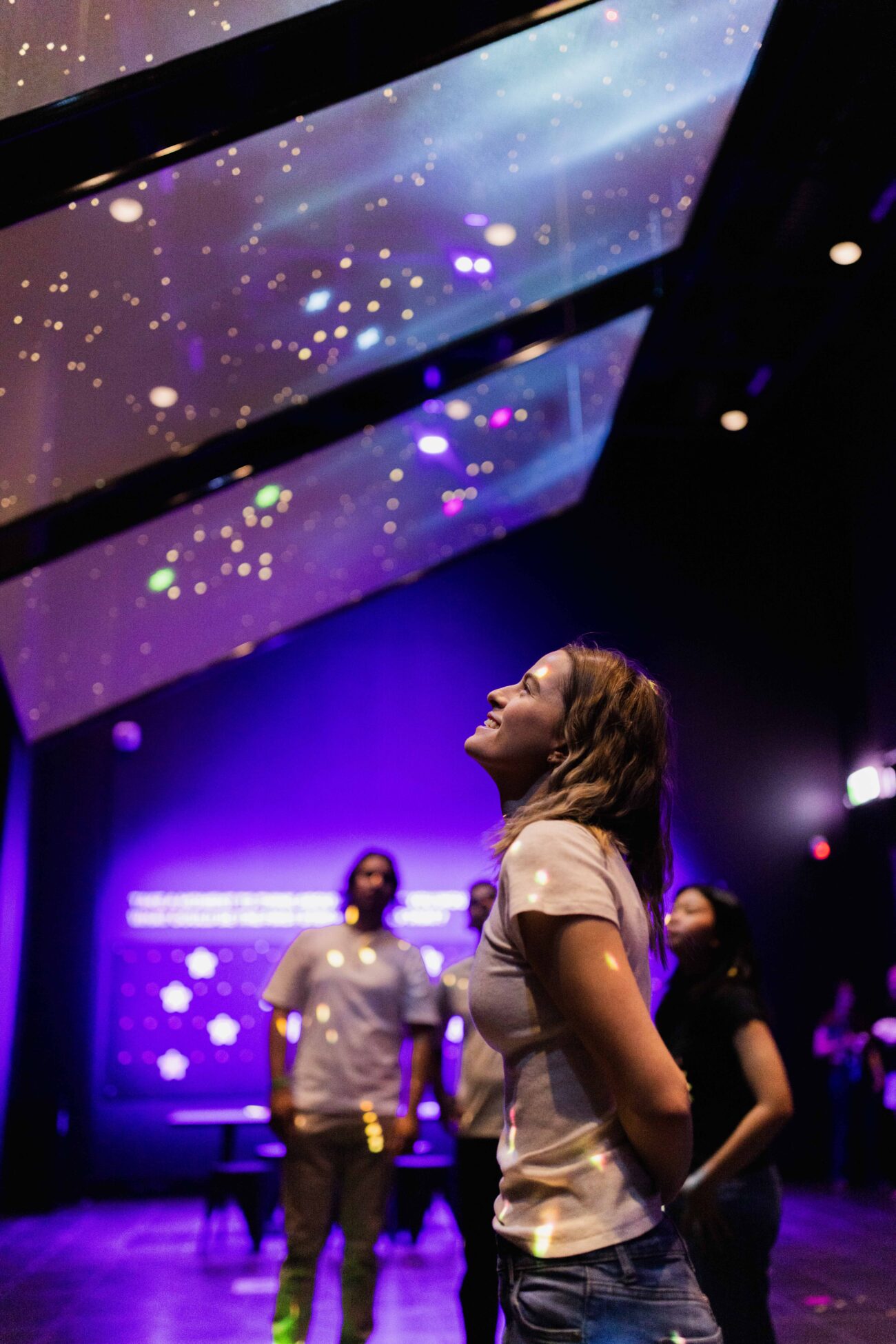
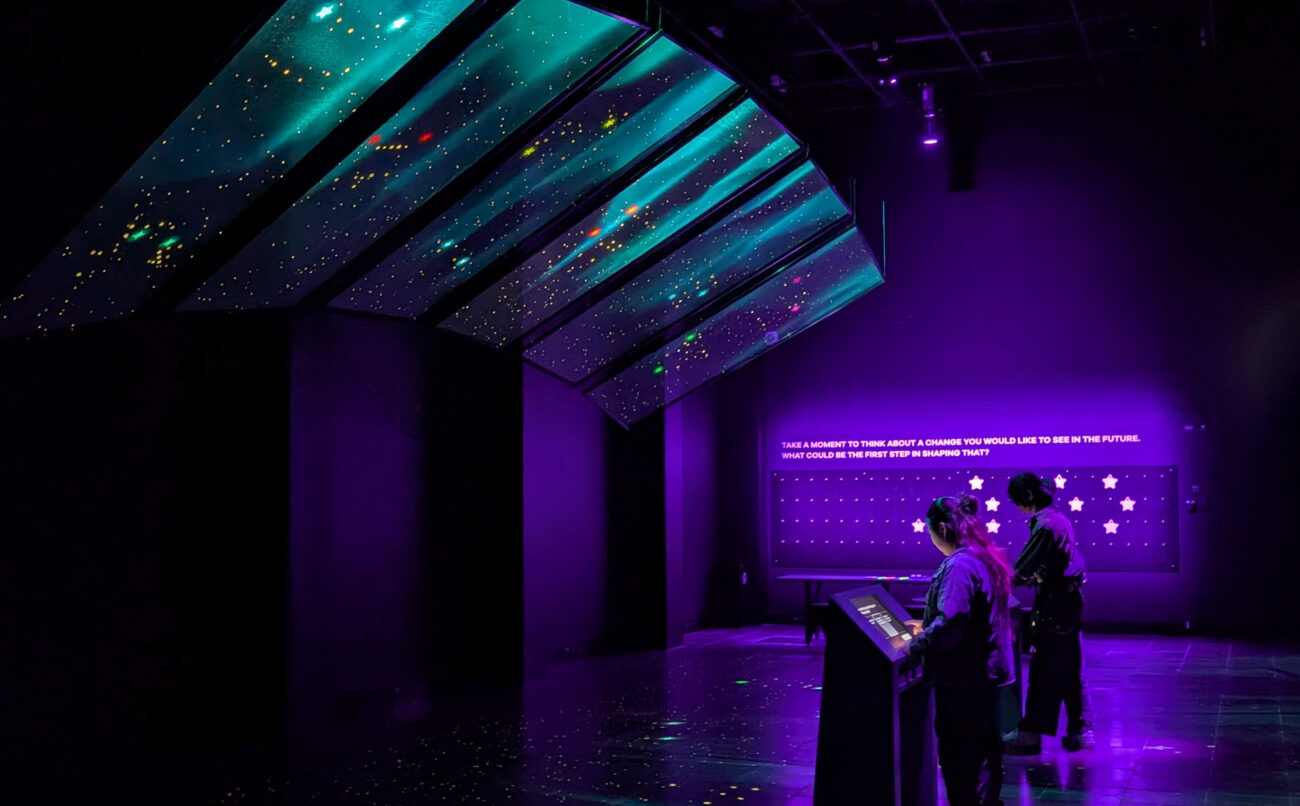
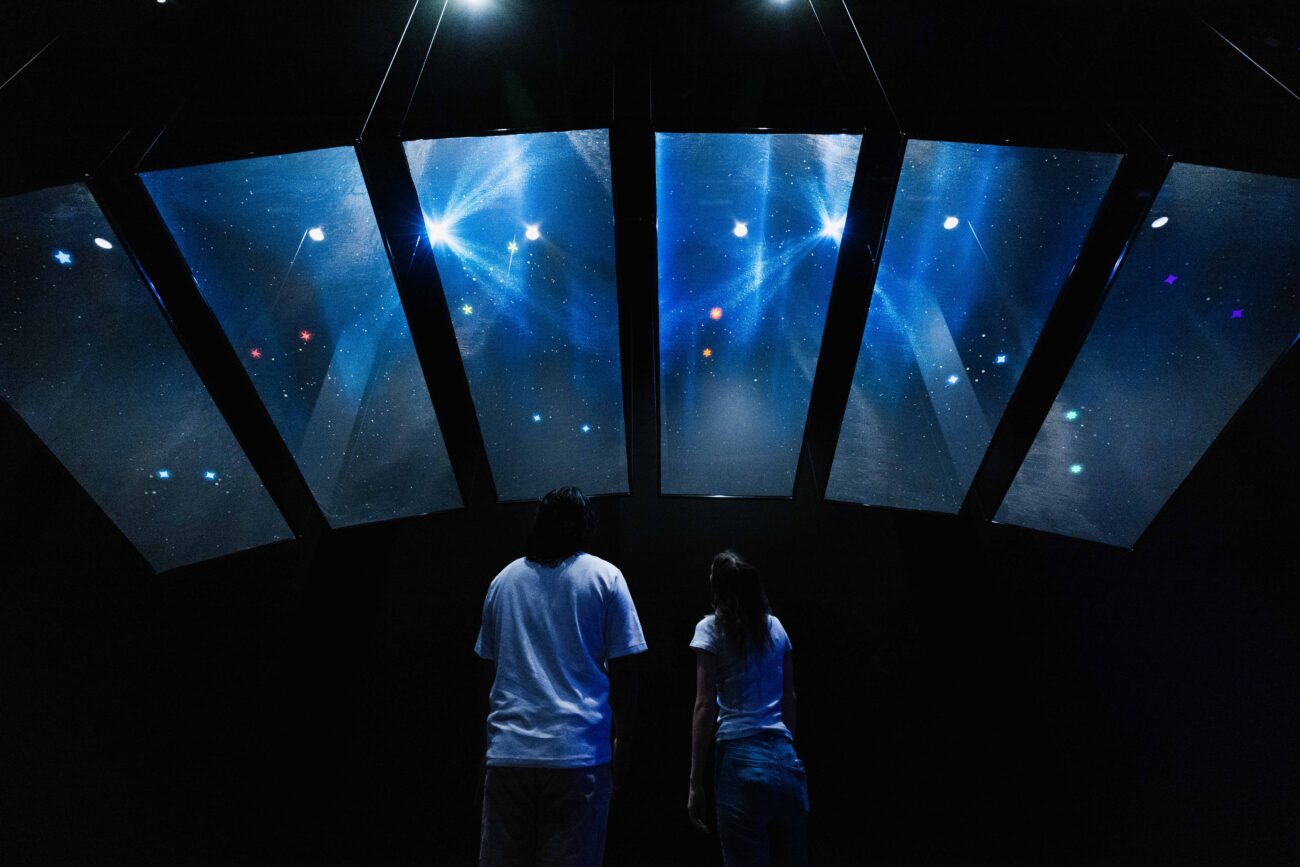
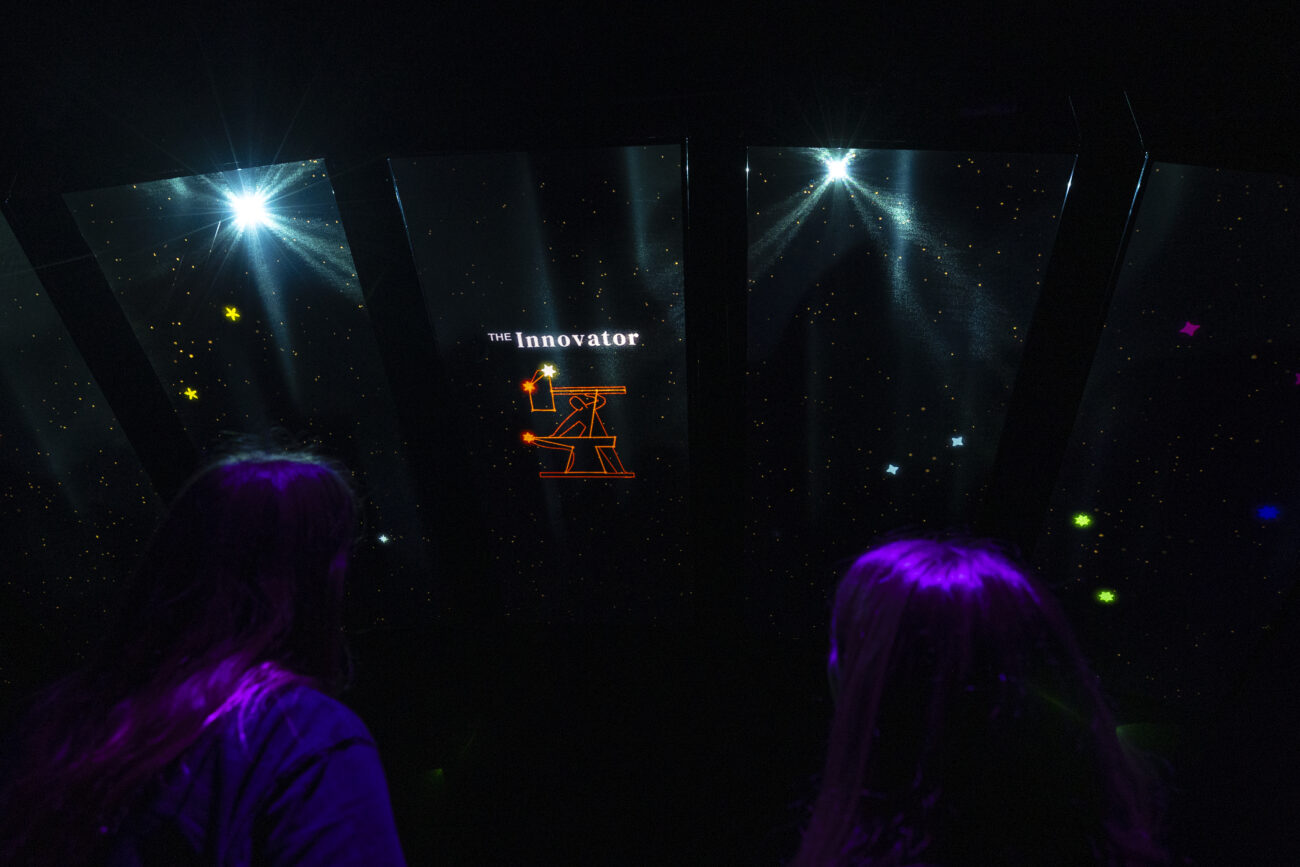
'Foresight'For the Foresight experience, we invite visitors to immerse themselves in a galaxy of beginnings – perspectives, paths, and futures waiting to unfold. In this last moment of the MOD. BEGINNINGS exhibition, we invite visitors to take a moment to reflect on all they’ve experienced so far.
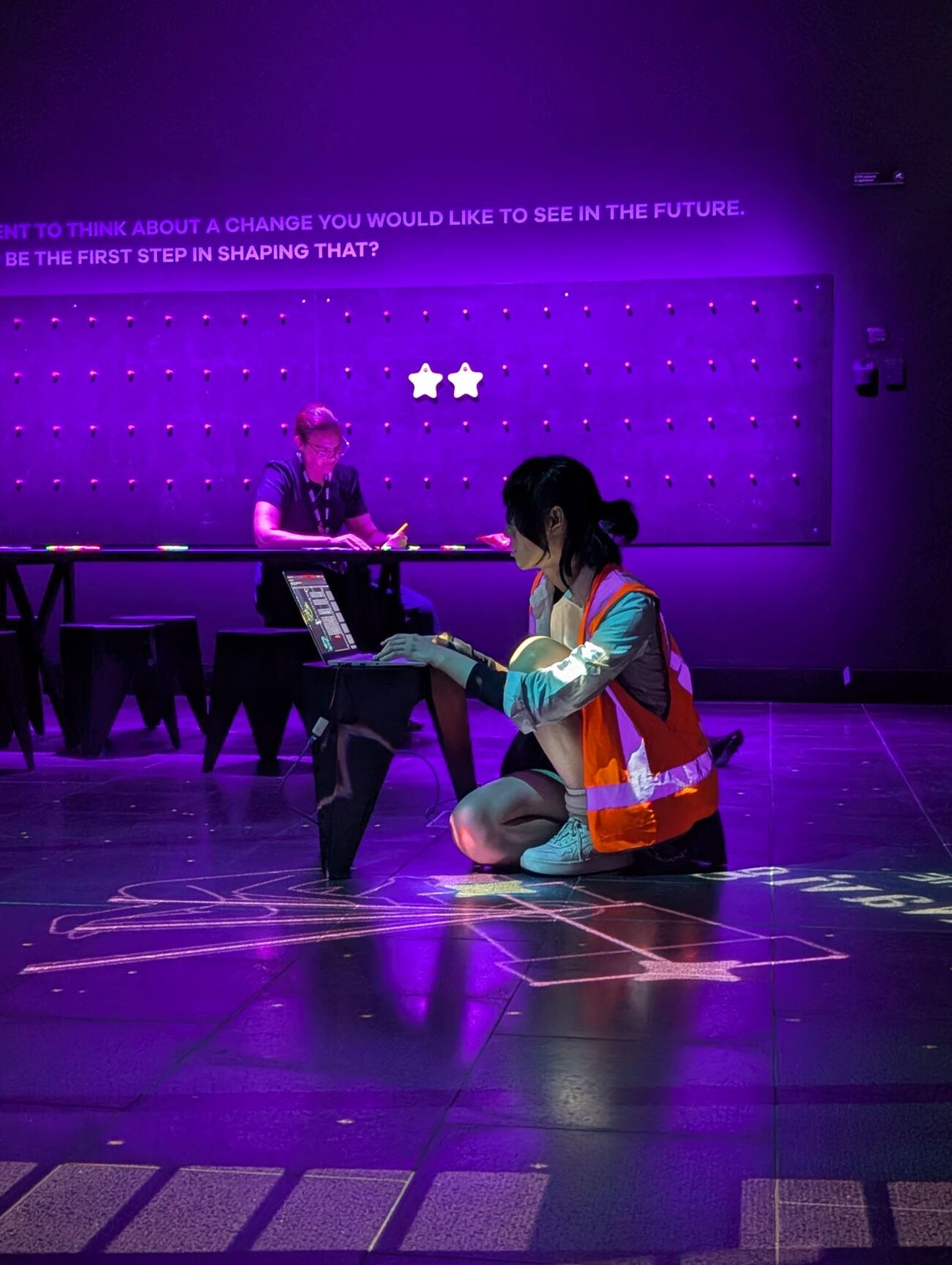
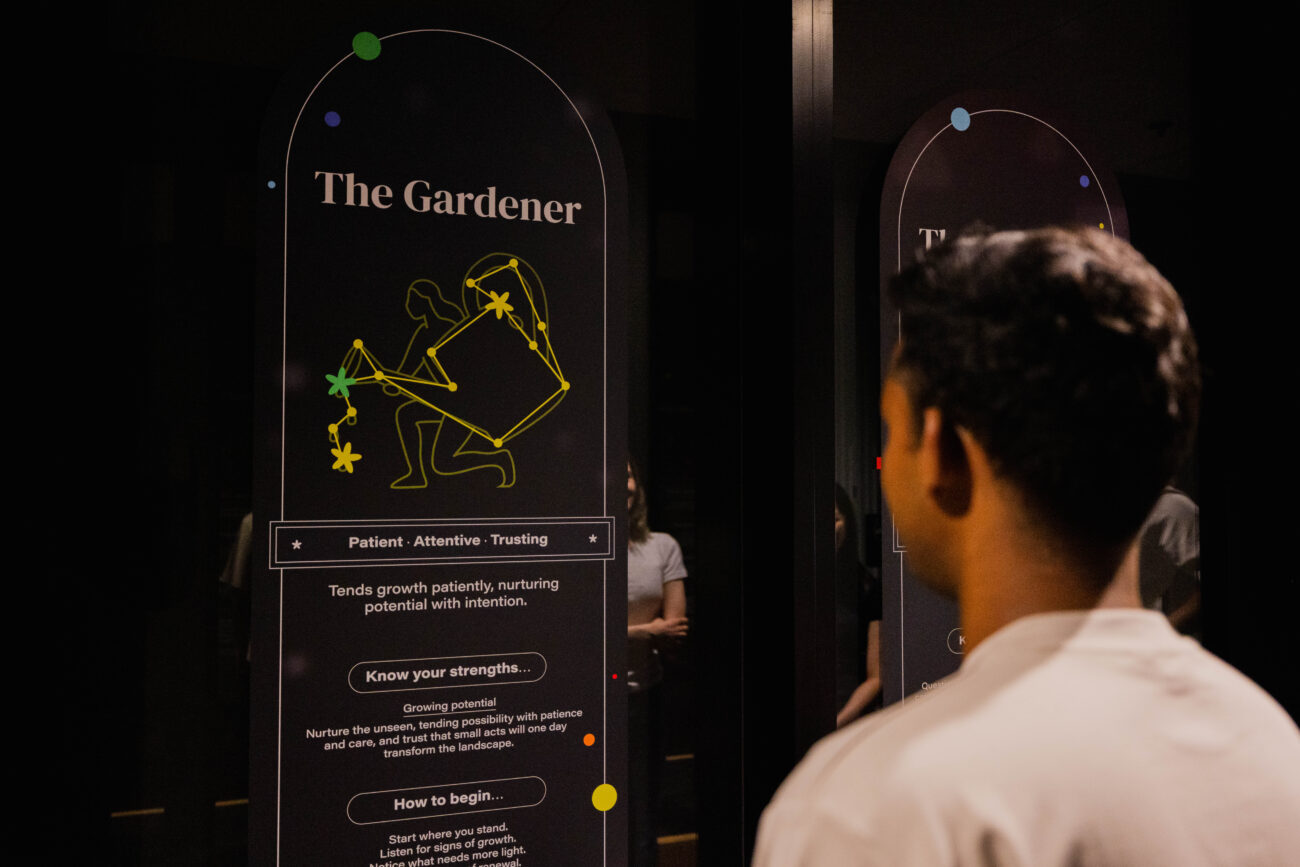
Here, visitors gain insight into their unique way of approaching the future through the creation of their own personal star. Their star is then launched into a projected starfield of possibilities above; growing, shifting, evolving as more visitors contribute to shared beginnings.
A more immersive projection environment
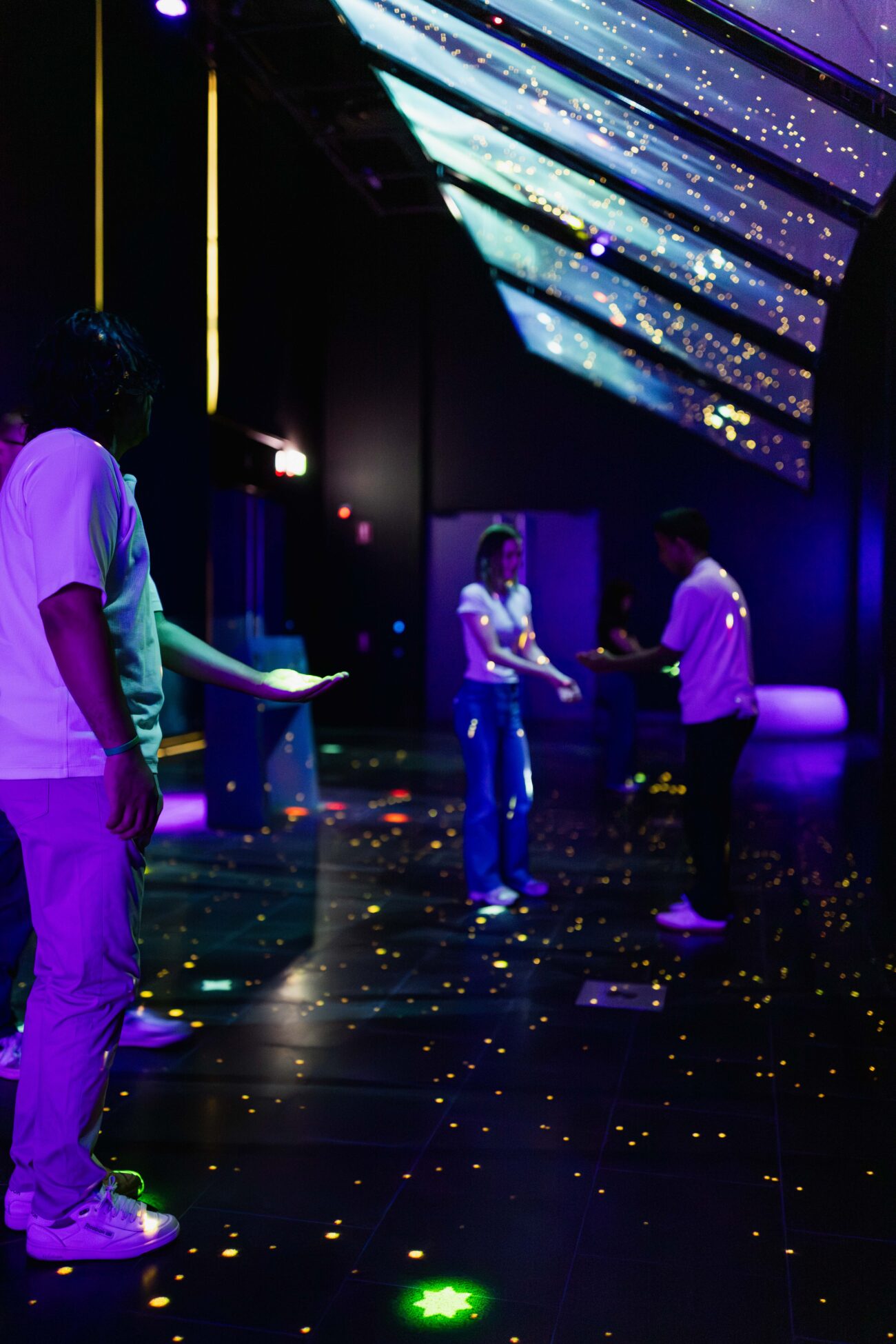
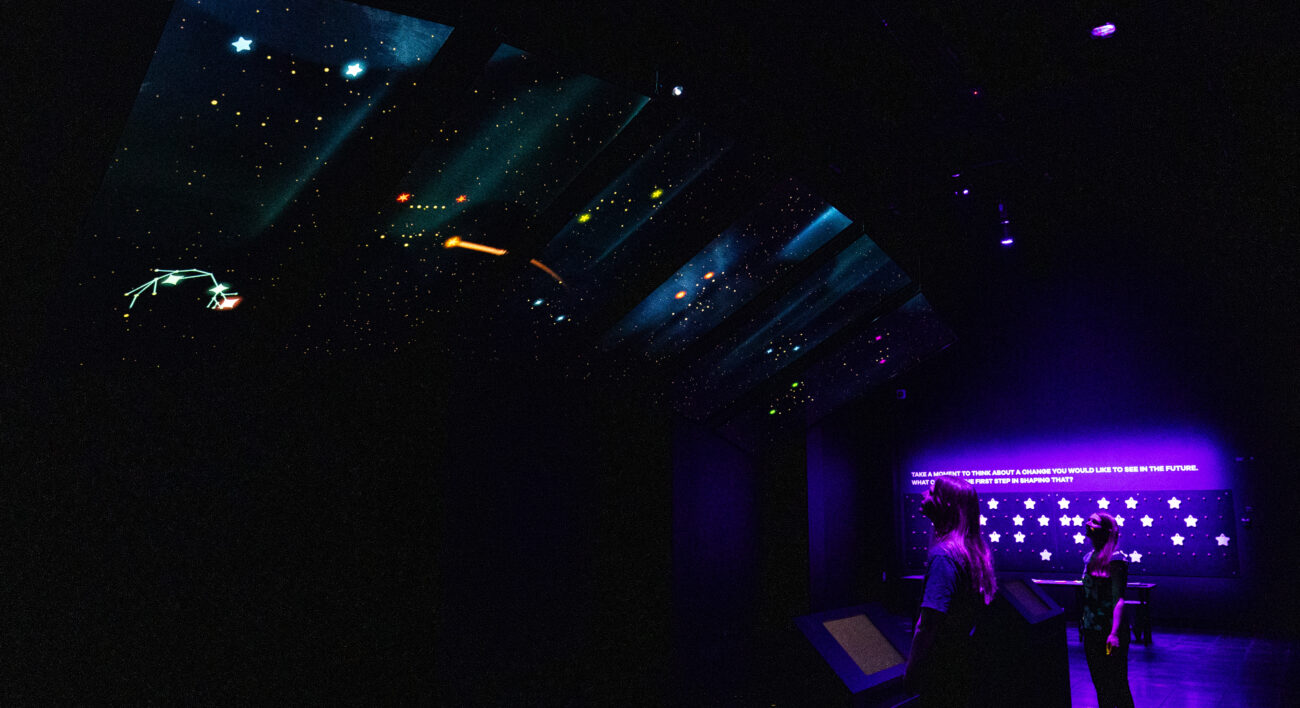
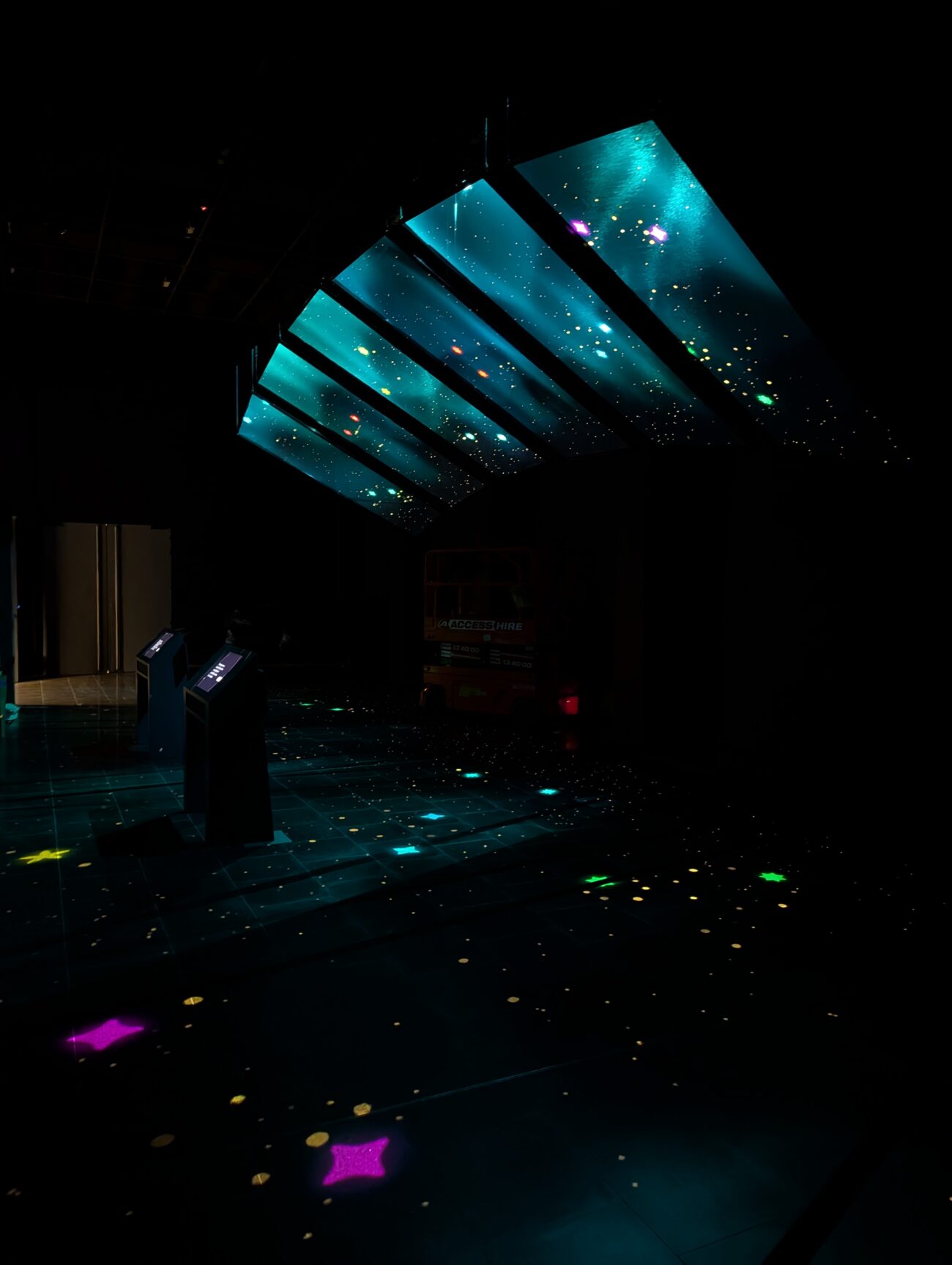
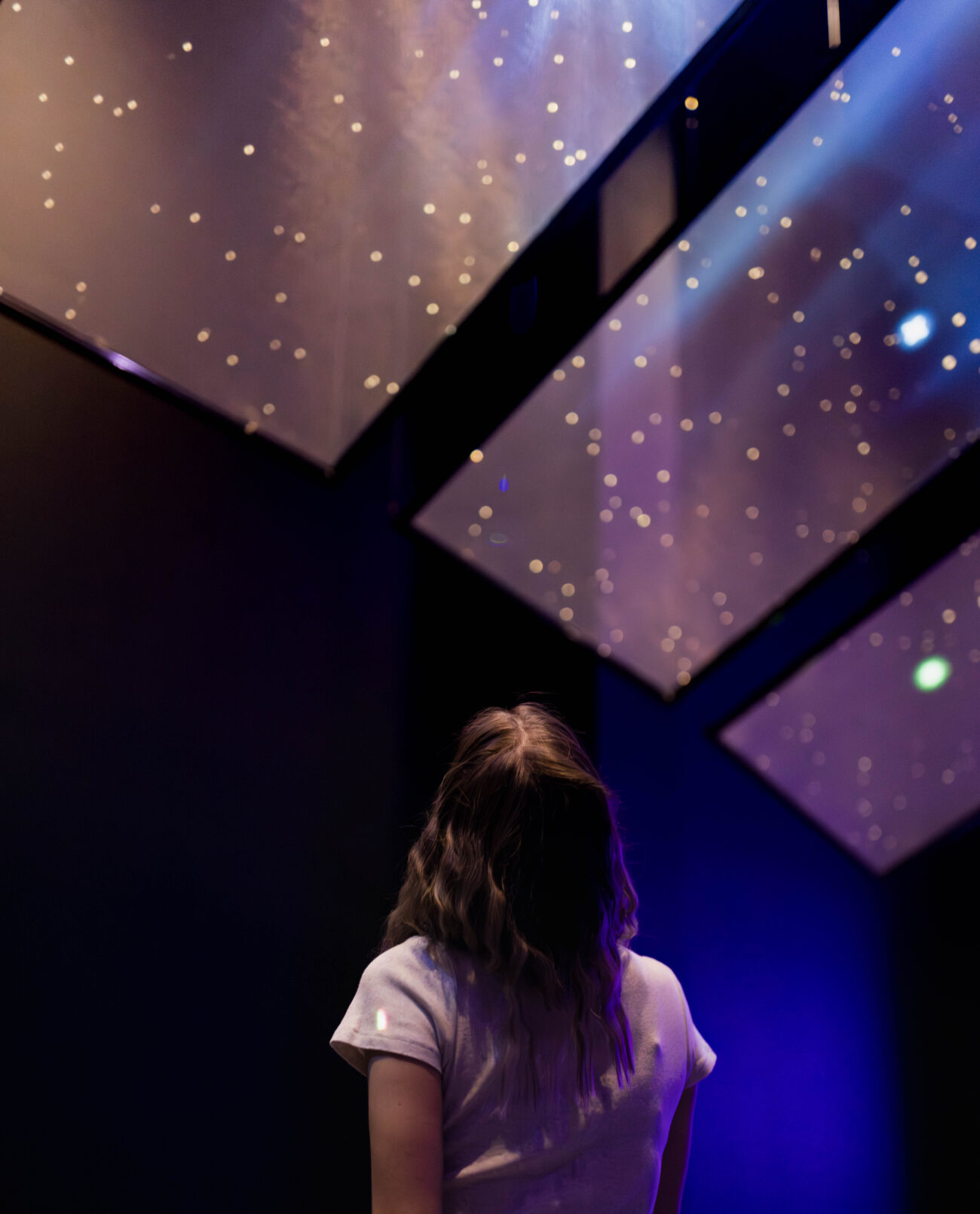
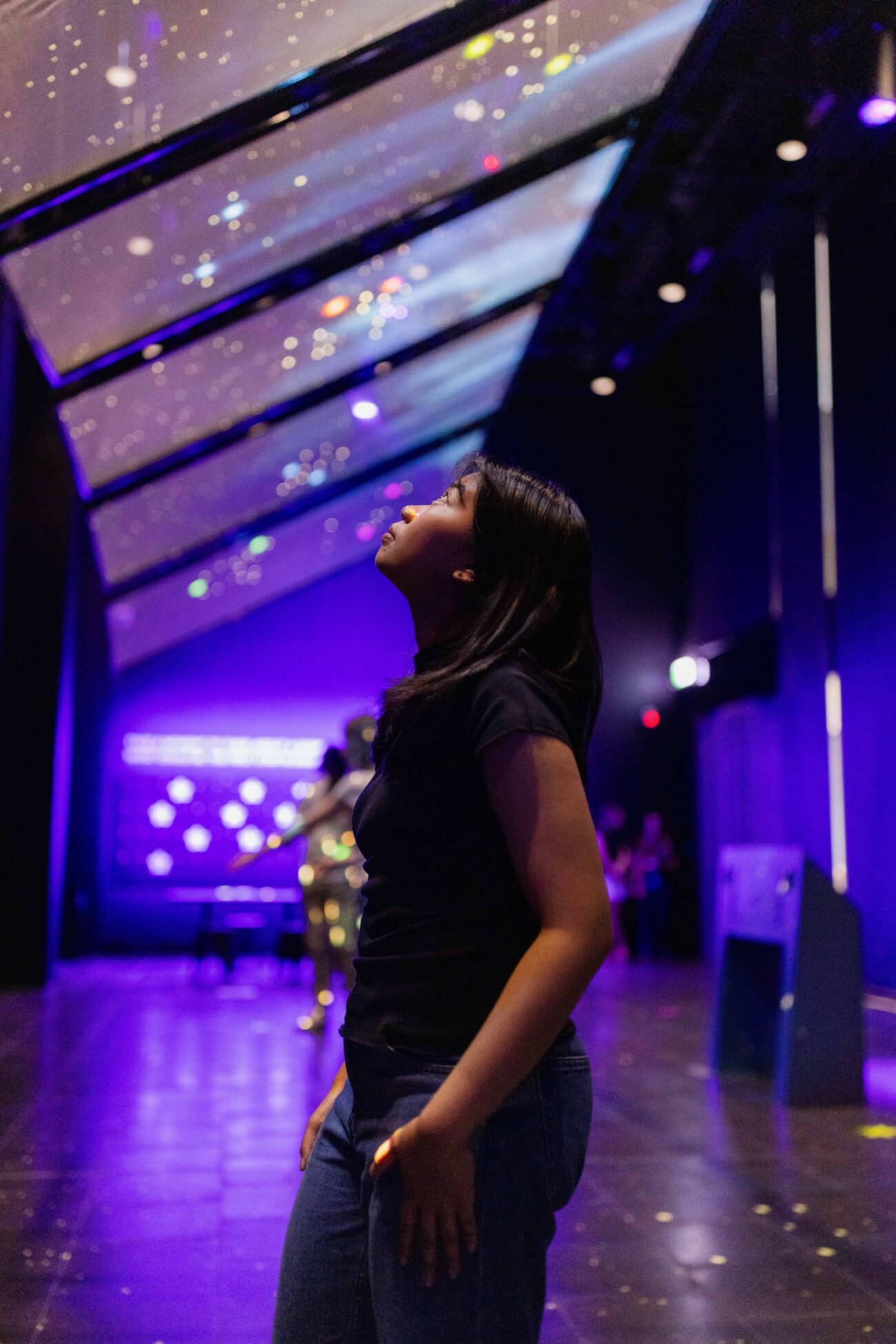
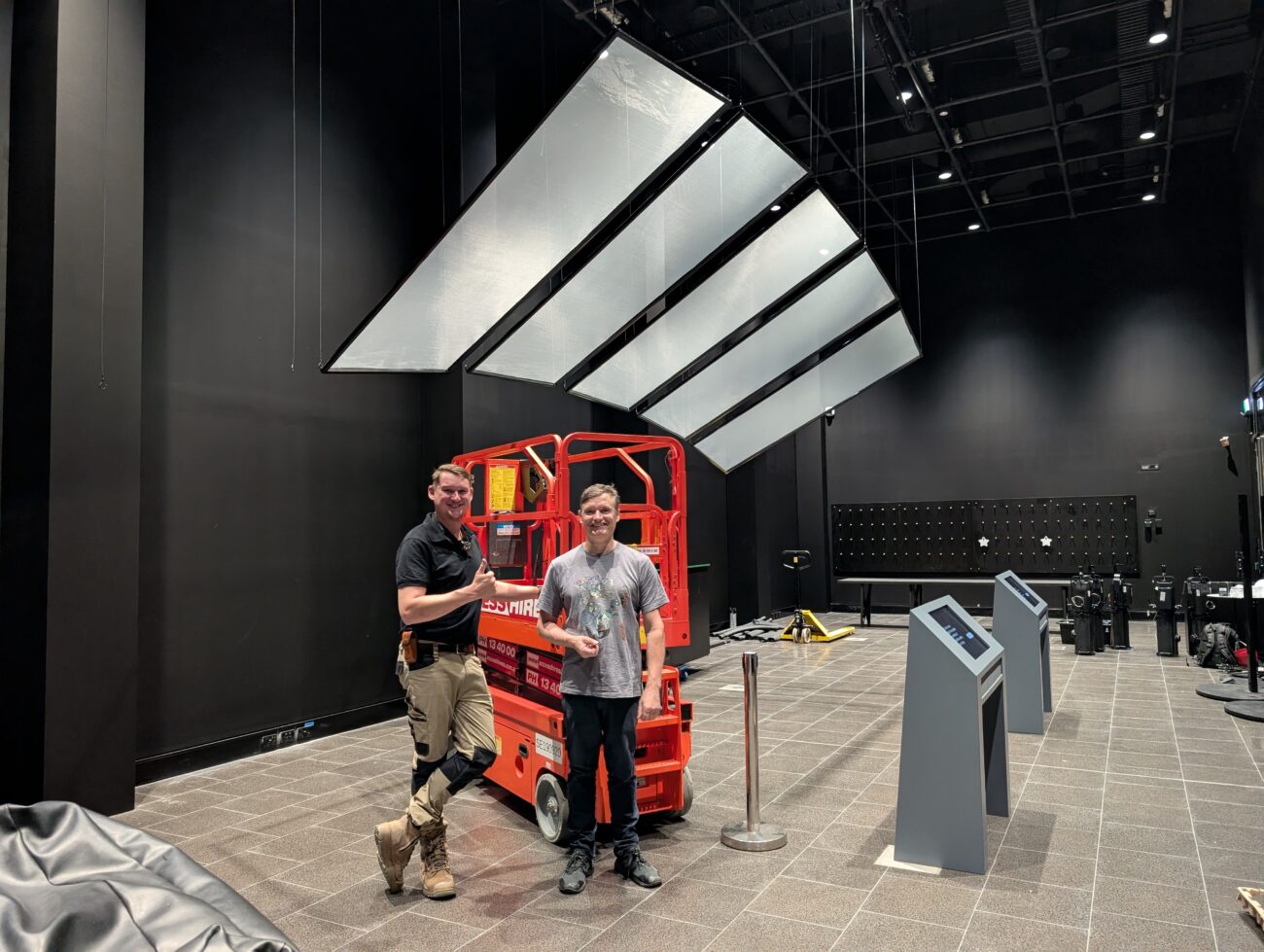
Immersive SpaceAt the heart of the immersive space, a series of suspended projection surfaces where stars and constellations hover in an evolving star field. The use of hologauze dissolves the boundary between the star field above and the space below. Projected light permeates its surface, casting beams of colour in ever-shifting patterns onto the floor below. What’s projected above isn’t separate, but layered into the interactive experience below. A space that balances two scales at once: the intimate and the immense.
Reflection becomes personal insight
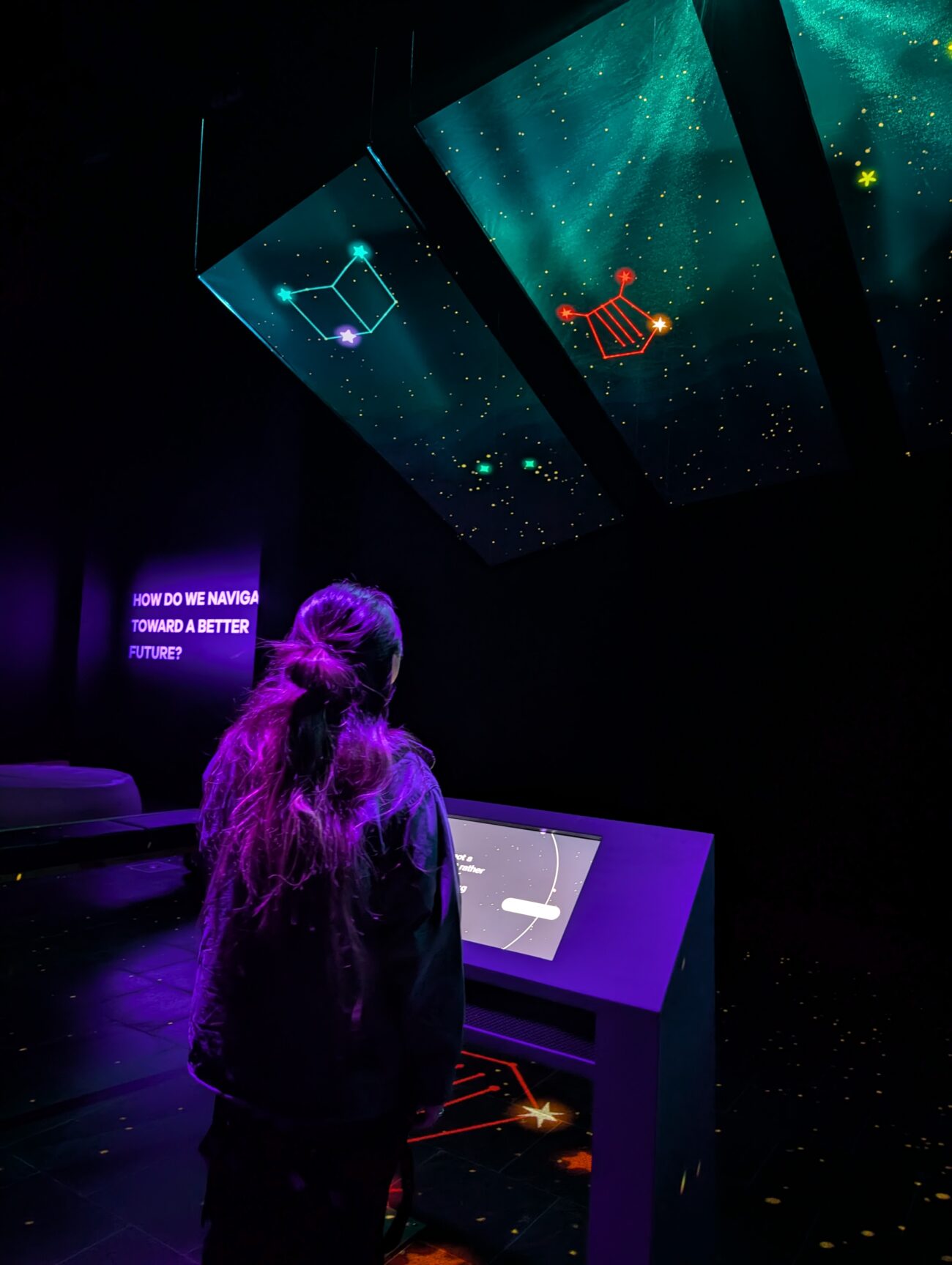
Interactive KioskAt the base of the cosmic projection surface, a touch display invites visitors to reflect through an interactive experience questionnaire, answering questions oriented toward the future-thinking capabilities explored in the exhibition. With each response, something begins to form.
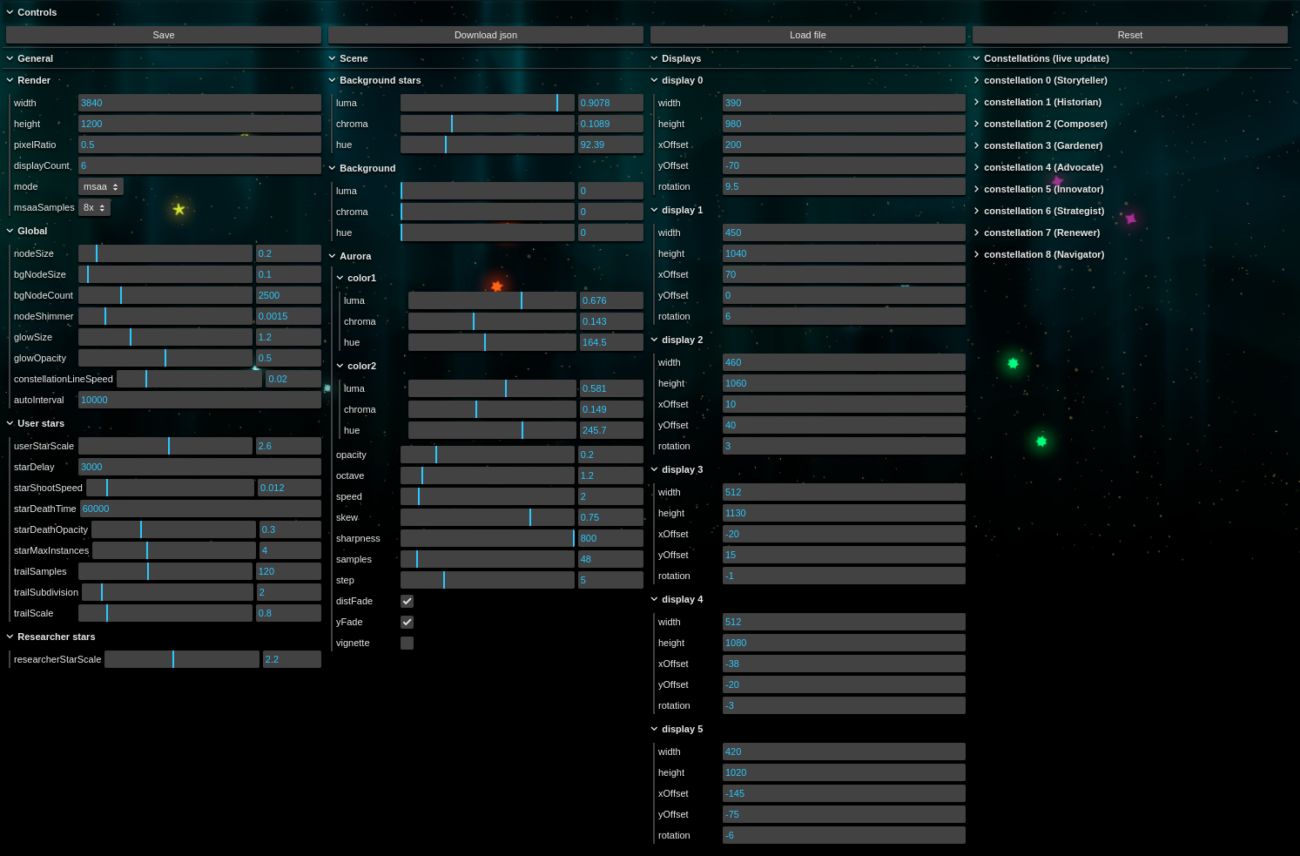
Powered by webgl and three.js, the background visual gradient anchors the interactive changes. Using a custom shader for gradients and oklab colour space, the very interactive design gives visitors a hint of what is to come. By the end of the interactive, this shifting colour field coalesces and transforms into a personalised star, assigned to one of the future-thinking zodiacs. Each element of a visitor’s star is shaped by their input – shape, colour, even secondary motion characteristics.
Finding orientation for the future
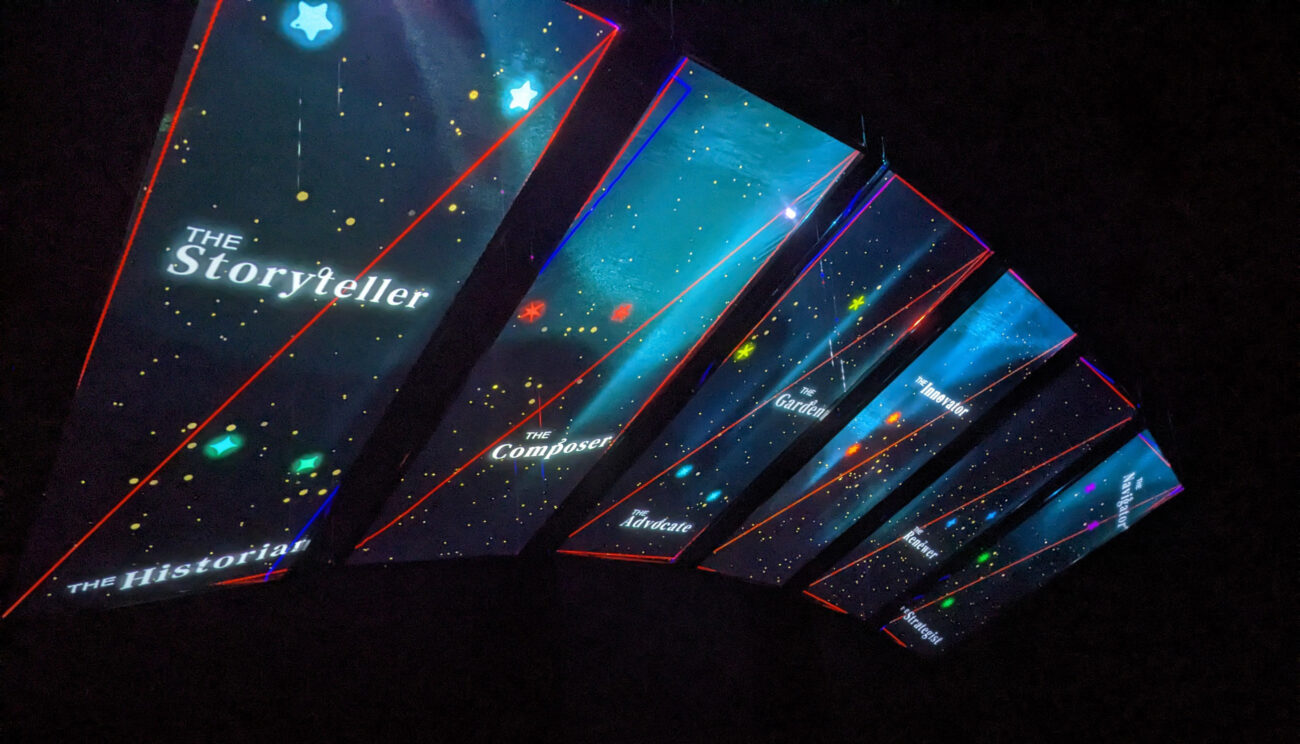
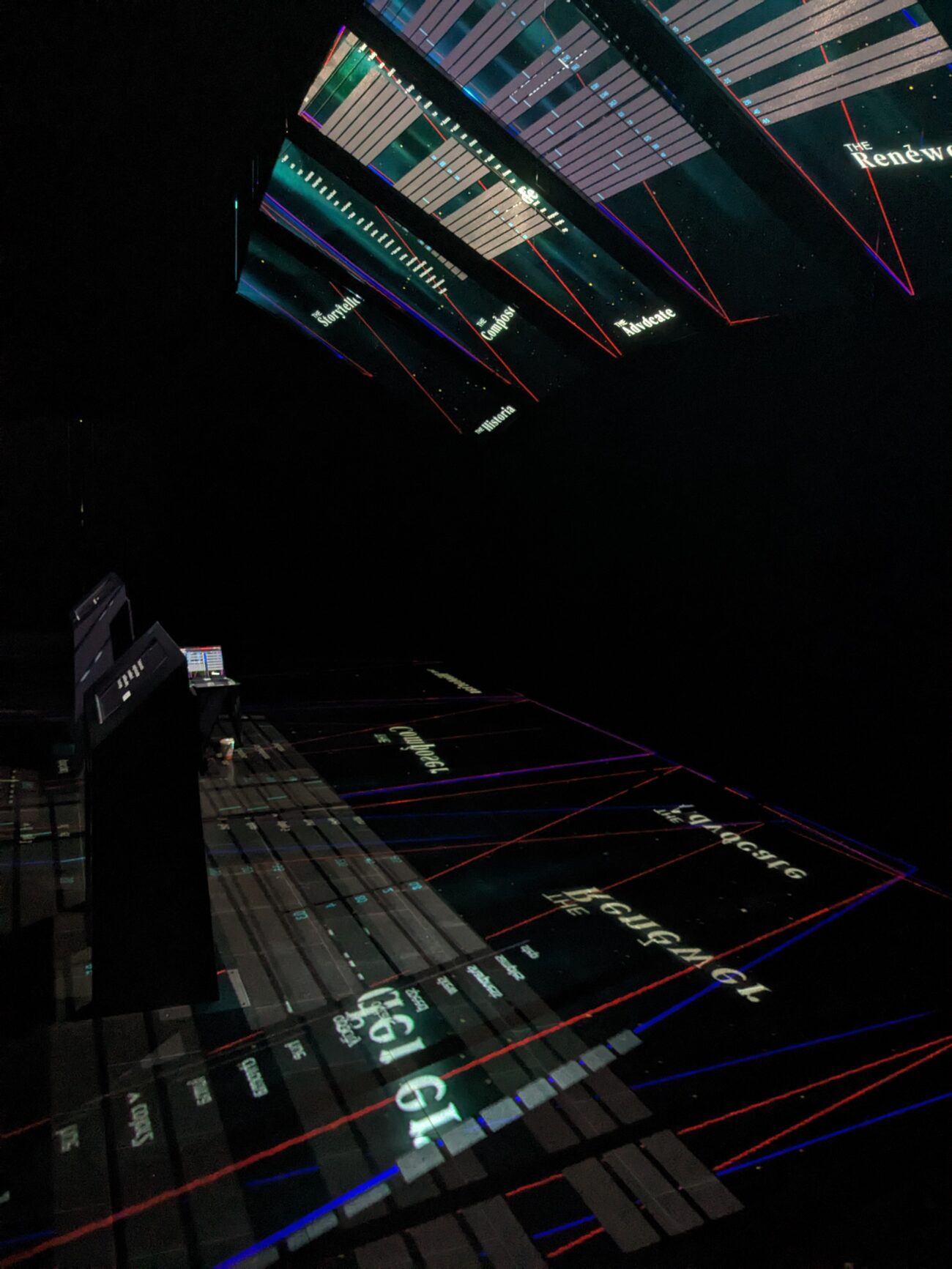
Star FieldWhen they’re ready, visitors are invited to ‘launch’ their star into the immersive experience above; to find their place in a collective map of beginnings. Once on the projection mapping display, visitor stars will be drawn towards one of nine constellations – each mapped to a future-thinking capability explored throughout the MOD. BEGINNINGS exhibition. The moment of impact reveals the illustrative zodiac mapped to that specific constellation, aligning visitors into categories of like-minded individuals.
Connecting two universes
Projection MappingGiven that the interactive kiosk was a web application, we made the unusual choice to also handle the Foresight large-scale projection rendering in web technology. This would allow us to maintain cohesion – both in terms of aesthetics and development – across the two touchpoints, as well as allowing flexibility in deployment.
The biggest challenge now was how to map the virtual scene to physical surface. Typically, this would be handled by technologies such as nDisplay. But as there is no web equivalent, we built our own custom adjustable projection mapping system. No small feat, but one that ensured we had the necessary flexibility when it came to deployment.
See more projects
Explore projects similar to MOD. Beginnings.
-
TYAMA Exhibition Melbourne
Multisensory experience reveals new perspectives through interactive story.
-

The Future Water Story
Collaboration + interactivity put young people at the centre of our water story.
-
Terracotta Warriors
Immersive experience sets the scene for WA Museum’s boldest exhibition.
-

Japan Supernatural
Interactive touch wall brings historic masterpiece to life.
-

Brian Robinson Collaboration
Immersive projection transforms leading First Nations artwork.
-

MGM Spa Digital Immersive
Dynamic content + real rainfall create immersive wellness experience.
-

vivo Lab
Immersive experience centre rediscovers the magic of photography.
-

Into the Blue
Immersive video animation reveals the vibrant world of the Indian Ocean.
-

Antopia
Immersive exhibition reveals the secret world of ants at Melbourne Museum.
-
Data Heart
Interactive data visualisation breathes life into real-time transactions.
-

World Expo Interactive Projection
Experience the story of a lifetime in the world’s largest interactive projection.
-

Super Wings Fly With Me
Interactive exhibition takes families on a tactile and immersive quest.
-
Macau Grand Prix Museum
Next generation museum experience explores the vibrant world of racing.
-

Ignite the Dream
Real-time interactions trigger an iconic Disney fireworks show.
-

Underground Cities
Interactive virtual environments explore underground infrastructure.
Stay in the loop
Subscribe to our newsletter to receive updates and insights about MOD. Beginnings and other S1T2 projects.